Part of the PhillyLegalConnect Quick Answer Series
Simple answers to common accident, insurance, and injury questions affecting Philadelphia, Pennsylvania, South Jersey, and the Jersey Shore.
Quick Answer
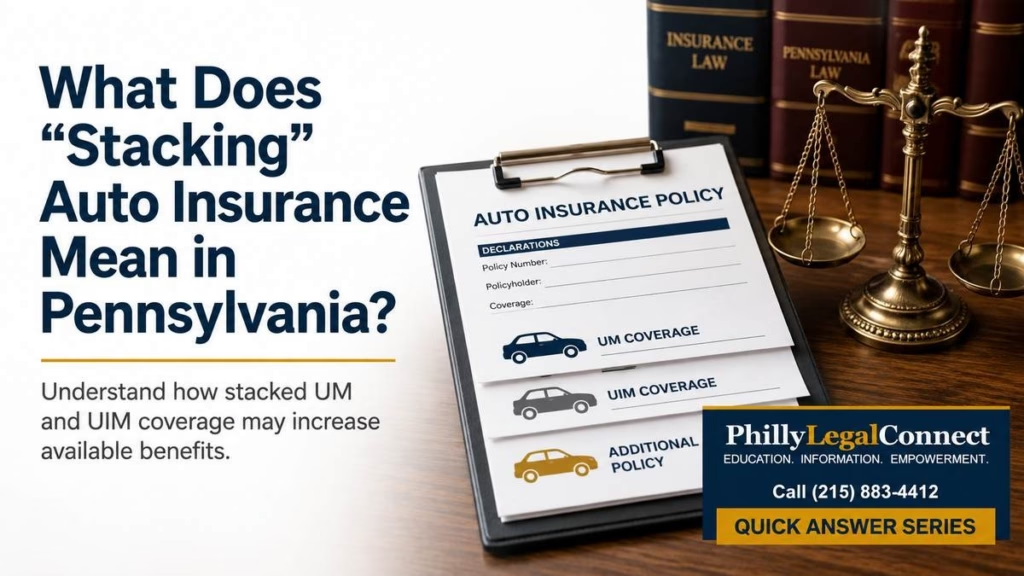
Stacking auto insurance in Pennsylvania generally means adding together uninsured or underinsured motorist coverage limits from more than one insured vehicle.
For example, if three vehicles each carry $100,000 in stacked UIM coverage, the available UIM limits could potentially total $300,000.
Stacking does not apply to every type of automobile insurance coverage, and it may not be available if the named insured validly waived stacked UM or UIM coverage.
Key Takeaways
- Stacking generally applies to uninsured motorist (UM) and underinsured motorist (UIM) coverage.
- It may allow coverage limits from multiple insured vehicles to be added together.
- Stacking can potentially increase the amount of UM or UIM coverage available after a serious accident.
- Pennsylvania allows a named insured to waive stacked UM or UIM coverage in writing.
- The policy and any stacking waiver should be reviewed to determine whether stacked coverage applies.
How Does Stacking Auto Insurance Work in Pennsylvania?
Pennsylvania law generally allows UM or UIM limits from multiple insured vehicles to be added together when stacking applies.
A simple example explains it:
2 vehicles × $100,000 = potentially $200,000
3 vehicles × $100,000 = potentially $300,000
So, if a household has several insured vehicles with stacked UM or UIM coverage, the available limits may be greater than the limit shown for a single vehicle.
Whether those limits are actually available depends on the policy, who qualifies as an insured, and whether stacking was waived.
Does Stacking Auto Insurance Apply to Every Coverage in Pennsylvania?
No.
Stacking auto insurance in Pennsylvania generally refers specifically to uninsured and underinsured motorist benefits.
It does not mean that liability coverage, collision coverage, comprehensive coverage, medical benefits, or every other automobile insurance benefit can automatically be multiplied simply because several vehicles are insured.
That distinction is important.
Can Stacking Be Waived in Pennsylvania?
Yes.
Pennsylvania law permits a named insured to waive stacked UM or UIM coverage by signing the required written waiver.
If stacking was validly waived, the available limits may be restricted to the applicable stated policy limits rather than combining limits from multiple vehicles.
Because of that, simply seeing several vehicles listed on an insurance policy does not necessarily mean stacked coverage is available.
The declarations page and any signed stacking-waiver documents should be reviewed.
Why Can Stacking Matter After a Serious Accident?
Stacking can matter because it may increase the amount of UM or UIM insurance available after an accident involving an uninsured or underinsured driver.
For someone with several insured vehicles, the difference between stacked and unstacked coverage can be significant.
That is why the number of insured vehicles, UM/UIM limits, policy language and any stacking waiver can become important after a serious accident.
What To Do Next
If you believe stacked auto insurance coverage may apply:
- Locate your automobile insurance declarations page.
- Identify the UM and UIM limits shown on the policy.
- Determine how many vehicles are insured.
- Look for any signed stacking waiver.
- Preserve all insurance documents and communications relating to the accident.
Need Help Understanding Stacked Auto Insurance Coverage?
Insurance coverage questions can become complicated when several vehicles or policies may be involved.
PhillyLegalConnect provides educational information to help Pennsylvania drivers better understand these issues.
When legal representation is needed, PhillyLegalConnect connects readers directly with The Oakes Firm — Philadelphia Injury Lawyers.
Speak Directly With The Oakes Firm
Free Car Accident Consultation. No fee unless there is a recovery.
Get Help After a Car Accident →
Related PhillyLegalConnect Quick Answers
- What Happens If the Other Driver Doesn’t Have Insurance in Pennsylvania?
- What Is the Difference Between Uninsured and Underinsured Motorist Coverage in Pennsylvania?
- What Is Limited Tort in Pennsylvania?
- What Are the Exceptions to Limited Tort in Pennsylvania?
- What Is Full Tort in Pennsylvania?
- What To Do After an Accident in Philadelphia
Explore More PhillyLegalConnect Resources
- Philadelphia Injury Playbook
- Philadelphia Neighborhood Safety
- South Jersey & Jersey Shore Injury Guide
About PhillyLegalConnect
PhillyLegalConnect was created to help individuals and families better understand accidents, insurance, injury claims, and safety issues affecting Philadelphia, South Jersey, and the Jersey Shore.
Our mission is to explain complicated legal and insurance topics in clear, practical language so readers can make informed decisions after an accident or injury.
About the Author
Thomas G. Oakes has more than four decades of experience working in and around Pennsylvania and New Jersey courtrooms. Throughout his career, he worked with attorneys, judges, and litigation teams, gaining firsthand insight into how accident and injury claims are investigated, documented, and presented.
Today, he serves as editor of PhillyLegalConnect, developing educational resources that help readers better understand accident, insurance, and personal injury topics.
Continue Learning
Explore more educational resources from PhillyLegalConnect:
Need Legal Guidance?
If you may need legal representation after an accident, learn more about The Oakes Firm.
Call (215) 883-4412
Connect With The Oakes Firm →Learn more about the purpose of this site on our About PhillyLegalConnect page.