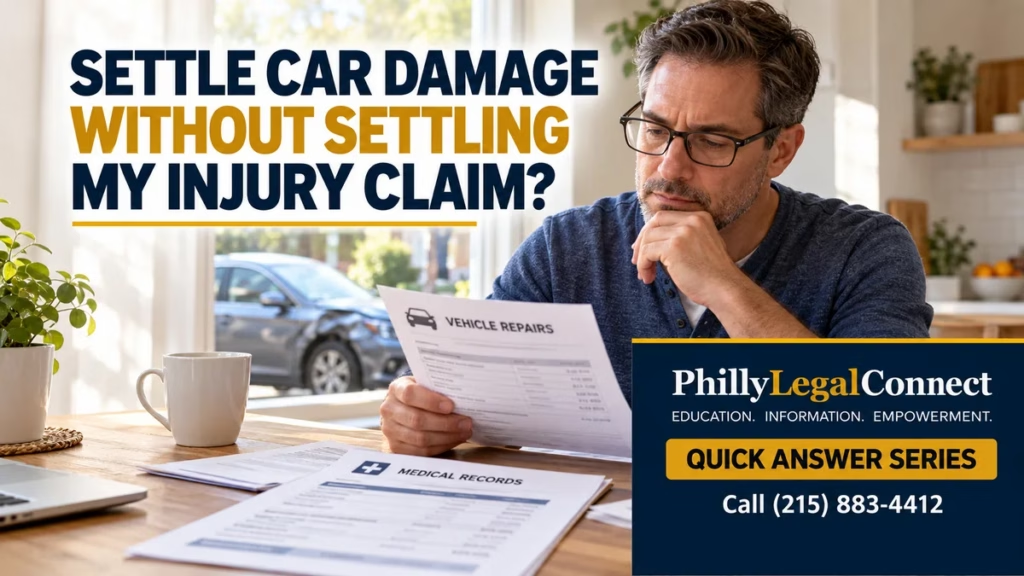
You may be able to settle your car damage claim without settling your injury claim, but review the proposed payment and release before accepting anything.
Part of the PhillyLegalConnect Quick Answer Series
Simple answers to common accident, insurance, and injury questions affecting Philadelphia, Pennsylvania, South Jersey, and the Jersey Shore.
Quick Answer
Often, a car-damage claim can be resolved separately from an injury claim—but never assume a payment or release affects only the vehicle. Before accepting the money, read the check, release, and accompanying correspondence. Confirm in writing which claim is being settled, which parties are being released, and whether any bodily-injury rights could be affected.
Key Takeaways
- Vehicle damage and bodily injury are commonly handled as separate parts of a claim.
- The settlement and release language matters when determining what is being resolved.
- Do not rely only on an adjuster’s verbal description.
- Request the complete terms in writing before accepting payment.
- Have unclear or broad language reviewed before signing or depositing a check.
Why Are Car Damage and Injury Claims Treated Separately?
Property damage concerns the vehicle and related property losses, such as repair costs, total-loss value, towing, or rental expenses. A bodily-injury claim concerns medical treatment, lost income, physical limitations, and other injury-related losses.
An insurer may be ready to resolve the vehicle damage while medical treatment is continuing. That timing does not automatically mean you must settle both matters together.
What Should I Check Before I Settle My Car Damage Claim?
Ask for the offer, proposed release, and any conditions in writing. Determine whether the documents identify only property damage or contain broader language about all claims, known and unknown injuries, or multiple people and companies.
Also check the front and back of the settlement check and any electronic-payment authorization. Do not sign or deposit a payment until you understand the language connected with it.
A useful question to ask is: “Does this payment settle only my property-damage claim, while leaving my bodily-injury claim open?” Request written confirmation and make sure the documents are consistent with the answer.
What If I Am Still Receiving Medical Treatment?
Tell the adjuster that you are discussing only the property-damage portion if that is your intention. Avoid giving a final description of injuries, recovery, or future treatment when those matters are not yet known.
If the insurer will not clearly confirm the settlement’s scope, consider obtaining guidance before accepting it. If an attorney already represents you, send the proposed payment and release to that attorney for review.
What To Do Next
- Request the complete property-damage offer and release in writing.
- Read every document and both sides of any check.
- Confirm which claims and parties the settlement covers.
- Keep copies of estimates, valuation documents, and communications.
- Obtain guidance before accepting language you do not understand.
Editor’s Note: This Quick Answer addresses whether a vehicle-damage settlement may be handled separately from an injury claim. The effect of a particular check, release, or settlement depends on its language and the circumstances.
Speak Directly With The Oakes Firm
If you are being asked to accept a property-damage payment while an injury claim remains open, The Oakes Firm can review the accident, settlement documents, and potential effect on your legal options.
Visit The Oakes Firm’s Philadelphia Car Accident Guide →
Free consultation. No fee unless there is a recovery.
Call (215) 883-4412
Related PhillyLegalConnect Quick Answers
- Should I Accept the Insurance Company’s First Settlement Offer?
- The Other Driver’s Insurance Company Wants Me to Sign a Medical Release. Should I?
- The Other Driver’s Insurance Isn’t Enough to Cover My Injuries. What Happens Now?
- The Insurance Company Wants a Recorded Statement. Do I Have to Give One?
Related PhillyLegalConnect Resources
About PhillyLegalConnect
PhillyLegalConnect was created to help individuals and families better understand accidents, insurance, injury claims, and safety issues affecting Philadelphia, South Jersey, and the Jersey Shore.
Our mission is to explain complicated legal and insurance topics in clear, practical language so readers can make informed decisions after an accident or injury.
About the Author
Thomas G. Oakes has more than four decades of experience working in and around Pennsylvania and New Jersey courtrooms. Throughout his career, he worked with attorneys, judges, and litigation teams, gaining firsthand insight into how accident and injury claims are investigated, documented, and presented.
Today, he serves as editor of PhillyLegalConnect, developing educational resources that help readers better understand accident, insurance, and personal injury topics.
Continue Learning
Explore more educational resources from PhillyLegalConnect:
Need Legal Guidance?
If you may need legal representation after an accident, learn more about The Oakes Firm.
Call (215) 883-4412
Connect With The Oakes Firm →Learn more about the purpose of this site on our About PhillyLegalConnect page.