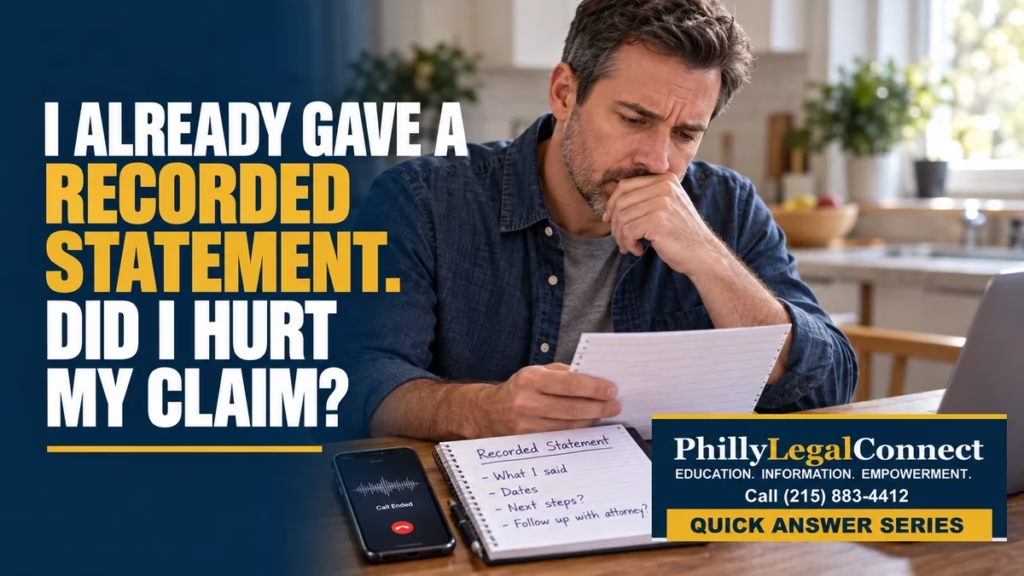
If you already gave a recorded statement to an insurance company, preserve the call details and identify any answers that concern you before deciding what to do next.
Part of the PhillyLegalConnect Quick Answer Series
Simple answers to common accident, insurance, and injury questions affecting Philadelphia, Pennsylvania, South Jersey, and the Jersey Shore.
Quick Answer
If you already gave a recorded statement to an insurance company, that does not automatically ruin your injury claim. Save the call details and related documents, identify any answer that concerns you, and avoid repeated calls offering changing explanations. Seek guidance if the insurer uses the statement to question your account, injuries, fault, or coverage.
Key Takeaways
- Giving a recorded statement does not automatically end an injury claim.
- The statement’s significance depends on its contents and the other evidence.
- Address concerns accurately rather than offering repeated, changing explanations.
What Should I Do After Giving a Recorded Statement?
Make a factual record of the call while you still remember it. Note the date, approximate time, insurance company, adjuster’s name, claim number, length of the call, and the general subjects discussed. Save related emails, text messages, letters, and call information.
You may ask the insurer whether a recording or transcript is available and how to request it. Do not assume the insurer must immediately provide one or that your notes reproduce every word accurately.
What If I Made a Mistake or Left Something Out?
People can be shaken after an accident, misunderstand a question, estimate incorrectly, or develop symptoms after the call. A mistake or incomplete answer does not necessarily end the claim, but how it is addressed may matter.
Do not call repeatedly to offer changing explanations. Identify the specific point that concerns you and preserve any information that provides context, such as photographs, medical records, the police report, or a timeline of when symptoms appeared. Consider obtaining guidance before submitting a correction or another detailed statement.
Can the Insurance Company Use the Statement?
The statement may become part of the claim file and may be compared with other evidence about the collision, symptoms, treatment, prior conditions, and daily activities. Its significance depends on what was asked, what was said, which insurer requested it, and the other available evidence.
If your own insurer requested the statement, policy cooperation requirements may be relevant. If the other driver’s insurer requested it, that adjuster represents the insurer—not you.
What To Do Next
- Save the call details and related claim correspondence.
- Ask how to request a recording or transcript.
- Identify any specific answer that concerns you and gather supporting information.
- Seek guidance before another detailed statement or correction if an important issue is disputed.
Editor’s Note: This Quick Answer addresses practical steps after an insurance recorded statement has already been given. Whether a particular answer affects fault, coverage, or an injury claim depends on the statement, the policy, and the other evidence.
Speak Directly With The Oakes Firm
If you are concerned about a recorded statement or the insurer is using it to question your accident or injuries, The Oakes Firm can review the claim history, available documents, and appropriate next steps.
Visit The Oakes Firm’s Philadelphia Car Accident Guide →
Free consultation. No fee unless there is a recovery.
Call (215) 883-4412
Related PhillyLegalConnect Quick Answers
- The Insurance Company Wants a Recorded Statement. Do I Have to Give One?
- I Told the Insurance Adjuster I Was Okay, but Now I’m Hurting. What Should I Do?
- The Other Driver’s Insurance Company Wants Me to Sign a Medical Release. Should I?
- Should I Accept the Insurance Company’s First Settlement Offer?
Related PhillyLegalConnect Resources
- Philadelphia Injury Playbook
- Philadelphia Neighborhood Safety
- What to Do After an Accident in Philadelphia
About PhillyLegalConnect
PhillyLegalConnect was created to help individuals and families better understand accidents, insurance, injury claims, and safety issues affecting Philadelphia, South Jersey, and the Jersey Shore.
Our mission is to explain complicated legal and insurance topics in clear, practical language so readers can make informed decisions after an accident or injury.
About the Author
Thomas G. Oakes has more than four decades of experience working in and around Pennsylvania and New Jersey courtrooms. Throughout his career, he worked with attorneys, judges, and litigation teams, gaining firsthand insight into how accident and injury claims are investigated, documented, and presented.
Today, he serves as editor of PhillyLegalConnect, developing educational resources that help readers better understand accident, insurance, and personal injury topics. Learn more about Thomas G. Oakes →
Continue Learning
Explore more educational resources from PhillyLegalConnect:
Need Legal Guidance?
If you may need legal representation after an accident or injury, learn more about The Oakes Firm.
Call (215) 883-4412
Connect With The Oakes Firm →Learn more about the purpose of this site on our About PhillyLegalConnect page.