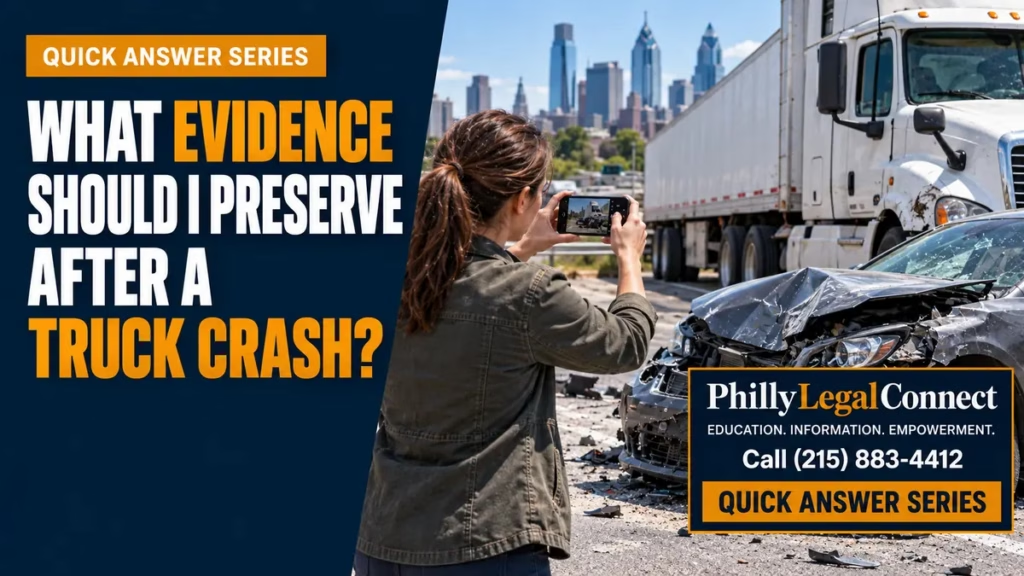
The most important evidence to preserve after a truck crash may include original scene files, truck identifiers, witness information, medical documentation, and records held by the trucking company.
Quick Answer
After a truck crash, preserve original photos and videos, truck-identification details, witness contacts, crash-report information, and records of your injuries and expenses. Evidence held by the trucking company—such as driving logs, onboard recordings, and maintenance records—may also matter. Ask promptly about preserving that material; do not assume it will remain available or try to access the truck yourself.
Part of the PhillyLegalConnect Quick Answer Series
Simple answers to common accident, insurance, and injury questions affecting Philadelphia, Pennsylvania, South Jersey, and the Jersey Shore.
Key Takeaways
- Keep original files, not just screenshots or social-media copies.
- Record identifying information for both the truck and trailer.
- Evidence held by a company may require a separate preservation request.
- Medical care and scene safety come before collecting evidence.
- An attorney can help identify evidence outside your control and address appropriate preservation requests.
What Evidence Should I Preserve After a Truck Crash?
Keep your original crash photographs, dashcam footage, messages, and witness contact information in one folder, with a backup. Avoid editing or deleting the originals. Save useful footage before your own device overwrites it.
If safely available, preserve photographs showing the truck’s company name, USDOT number, license plate, and trailer number. Include vehicle damage, road markings, debris, and the surrounding scene. Do not return to dangerous traffic or enter restricted property to obtain missing photographs.
Keep the police incident number, towing paperwork, medical records, bills, receipts, and documentation of missed work. Write down what you remember, separating firsthand observations from information someone else supplied.
How Can I Preserve Truck Crash Evidence Held by Someone Else?
A truck-crash investigation may involve several different records: driver-duty logs, dashcam video, dispatch messages, GPS information, maintenance records, and cargo paperwork. Onboard vehicle data may also help, depending on the equipment and what it recorded.
These are not all the same system. An electronic logging device records duty-status information; it should not be assumed to contain every detail that a separate vehicle recorder or camera might capture.
Identify nearby businesses or witnesses who may have video. A request to preserve material is different from obtaining a copy. An attorney can evaluate whom to notify and whether formal legal steps are needed.
Address Vehicle Preservation Promptly
Tell your attorney where the vehicles are located and whether repairs, inspection, sale, or disposal are proposed. Do not remove parts or attempt your own electronic download.
Our separate totaled-car Quick Answer explains the disposal decision, including ownership and continuing storage costs.
What To Do Next
Once you have identified the evidence to preserve after a truck crash, organize what you control and seek guidance about material held by other people or businesses.
- Back up original photographs, recordings, and messages.
- Make a list of witnesses, company identifiers, and possible video sources.
- Record where your vehicle is stored and any proposed repair or disposal date.
- Seek prompt guidance about evidence outside your control.
Editor’s Note: This answer concerns preserving information after a truck crash. Available records and preservation duties vary; no single retention period applies to every type of evidence.
Speak Directly With The Oakes Firm
For help assessing truck-crash evidence and possible preservation steps, visit The Oakes Firm’s Truck Accident Guide . For legal-representation inquiries through PhillyLegalConnect, call (215) 883-4412
Related PhillyLegalConnect Quick Answers
- My Car Was Totaled After a Truck Crash. Should I Let the Salvage Yard Dispose of It?
- Who Else May Be Responsible for My Truck Accident Besides the Driver?
- What Should I Do If the Trucking Company or Its Insurer Contacts Me?
Related PhillyLegalConnect Resources
- Philadelphia Injury Playbook
- PhillyLegalConnect Quick Answer Series
- Five Essential Photos You Should Take After a Car Accident
- Philadelphia Neighborhood Safety Guide
- South Jersey & Jersey Shore Injury Guide
About PhillyLegalConnect
PhillyLegalConnect was created to help individuals and families better understand accidents, insurance, injury claims, and safety issues affecting Philadelphia, South Jersey, and the Jersey Shore.
Our mission is to explain complicated legal and insurance topics in clear, practical language so readers can make informed decisions after an accident or injury.
About the Author
Thomas G. Oakes has more than four decades of experience working in and around Pennsylvania and New Jersey courtrooms. Throughout his career, he worked with attorneys, judges, and litigation teams, gaining firsthand insight into how accident and injury claims are investigated, documented, and presented.
Today, he serves as editor of PhillyLegalConnect, developing educational resources that help readers better understand accident, insurance, and personal injury topics. Learn more about Thomas G. Oakes →
Continue Learning
Explore more educational resources from PhillyLegalConnect:
Need Legal Guidance?
If you may need legal representation after an accident or injury, learn more about The Oakes Firm.
Call (215) 883-4412
Connect With The Oakes Firm →Learn more about the purpose of this site on our About PhillyLegalConnect page.