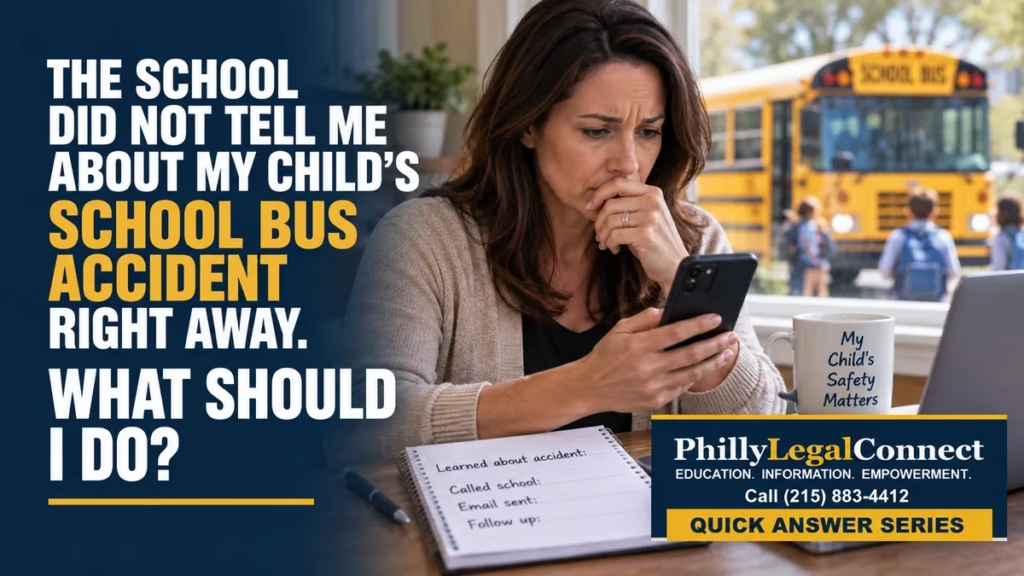
A delayed school bus accident notification can leave a parent with important questions about what happened, when it happened, and what information the school or transportation provider has. If the school did not tell you about your child’s school bus accident right away, the first step is to document when you learned about it and request the basic facts in writing.
Quick Answer
If your school bus accident notification came late—or you learned about the accident from your child—write down when and how you first learned what happened. Then ask the school or transportation provider for the basic facts in writing, including the date, time, location, bus number, transportation company, whether police or emergency medical services responded, and how your child was evaluated.
Preserve every message you receive. A delay in notification does not by itself establish who was legally responsible for the accident.
Part of the PhillyLegalConnect Quick Answer Series
Simple answers to common accident, insurance, and injury questions affecting Philadelphia, Pennsylvania, South Jersey, and the Jersey Shore.
Key Takeaways
- Record when you first learned about the accident and who contacted you.
- Ask for the basic accident details in writing.
- Save emails, texts, app messages, voicemails, and school notices.
- Ask whether police, EMS, the bus company, or another agency created a separate report.
- If your child has symptoms or injuries, focus on appropriate medical care rather than waiting for the school’s paperwork.
Start With a Simple Timeline
If you learned about the accident hours later—or from your child instead of the school—write down the sequence while it is still fresh.
Include the approximate time of the accident, when your child says it happened, when you were notified, who contacted you, and what you were told.
If the information changes later, keep both the earlier and later communications rather than replacing them.
The purpose is not to accuse anyone. It is to create a clear record of what you knew and when you knew it.
What to Request After a Delayed School Bus Accident Notification
Send a short written request to the school administrator or transportation contact.
Ask for information such as:
- the date, time, and location of the incident;
- the bus number and transportation company;
- whether another vehicle was involved;
- whether police, EMS, or school medical personnel responded;
- whether your child was examined or complained of symptoms;
- whether witnesses, camera footage, or an incident report were identified.
If another office or transportation contractor handles the request, record the name and contact information and follow up there.
Delayed Notice and Your Child’s Health Are Separate Issues
Do not wait for the school to finish its internal review before addressing your child’s symptoms.
If your child reports pain, dizziness, headache, confusion, nausea, unusual tiredness, or another concerning change, contact an appropriate healthcare professional.
Tell the provider that the symptoms followed a school bus incident and give an accurate timeline.
A late school notification may be concerning, but the legal significance of the delay depends on the specific circumstances. It should not be treated as automatic proof of negligence or as a substitute for medical documentation.
What to Do Next
- Write down when and how you learned about the accident.
- Save every school, transportation-company, police, and medical communication.
- Request the basic accident facts and ask what records were created.
- Obtain appropriate medical care for symptoms or injuries.
- If delayed notice affects your ability to understand what happened or preserve evidence, consider legal guidance.
Editor’s Note: This Quick Answer addresses delayed notification after a school bus accident. Whether a school or transportation provider had a particular legal duty to notify a parent, and the significance of any delay, depends on the facts and applicable law.
Speak Directly With The Oakes Firm
If your child was injured in a school bus accident and delayed notification has left important questions unanswered, The Oakes Firm can help you understand what records may matter, what evidence should be preserved, and what legal issues may need prompt attention.
Learn more about The Oakes Firm’s Philadelphia personal injury representation.
Free consultation. No fee unless there is a recovery.
Related PhillyLegalConnect Quick Answers
- My Child Was in a School Bus Accident. What Should I Do Next?
- Back-to-School Accidents in Philadelphia: What Parents Should Know
Related PhillyLegalConnect Resources
About PhillyLegalConnect
PhillyLegalConnect was created to help individuals and families better understand accidents, insurance, injury claims, and safety issues affecting Philadelphia, South Jersey, and the Jersey Shore.
Our mission is to explain complicated legal and insurance topics in clear, practical language so readers can make informed decisions after an accident or injury.
About the Author
Thomas G. Oakes has more than four decades of experience working in and around Pennsylvania and New Jersey courtrooms. Throughout his career, he worked with attorneys, judges, and litigation teams, gaining firsthand insight into how accident and injury claims are investigated, documented, and presented.
Today, he serves as editor of PhillyLegalConnect, developing educational resources that help readers better understand accident, insurance, and personal injury topics. Learn more about Thomas G. Oakes →
Continue Learning
Explore more educational resources from PhillyLegalConnect:
Need Legal Guidance?
If you may need legal representation after an accident or injury, learn more about The Oakes Firm.
Call (215) 883-4412
Connect With The Oakes Firm →Learn more about the purpose of this site on our About PhillyLegalConnect page.