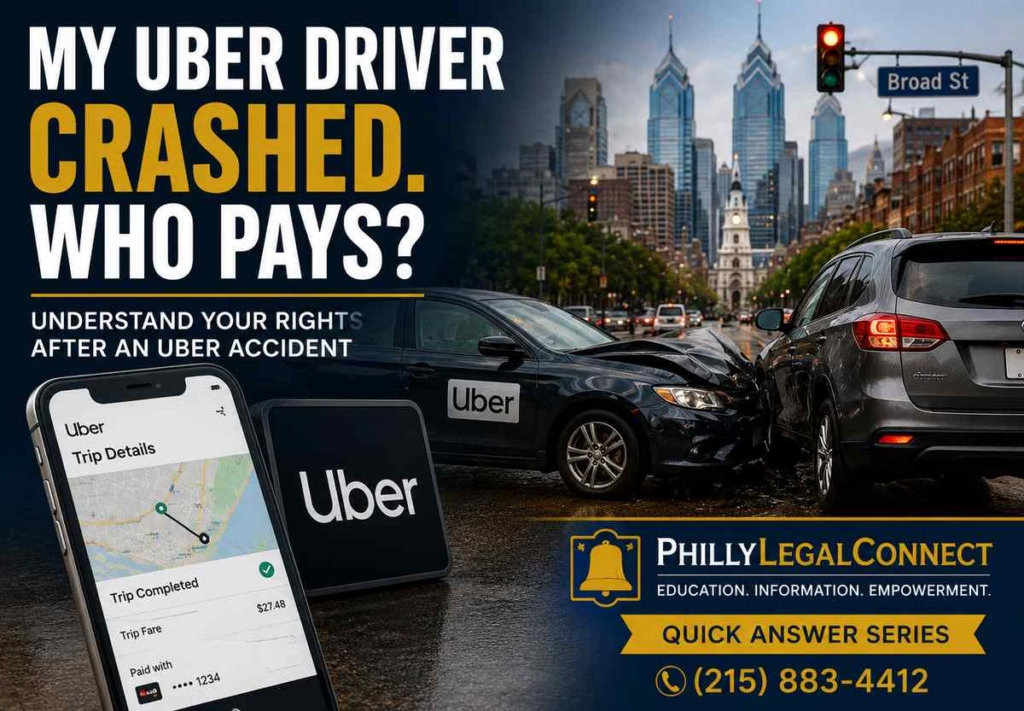
If your Uber driver crashes during an active trip, payment may come from Uber’s commercial insurance, another driver’s coverage, or other available automobile-insurance benefits.
Part of the PhillyLegalConnect Quick Answer Series
Simple answers to common accident, insurance, and injury questions affecting Philadelphia, Pennsylvania, South Jersey, and the Jersey Shore.
Quick Answer
If your Uber driver caused an accident while transporting you, several insurance policies may potentially pay for your injuries and losses. These may include Uber’s commercial insurance policy, the Uber driver’s applicable coverage, your own automobile or medical-benefits coverage, and—in some cases—insurance carried by another driver involved in the collision.
Uber states that a trip is covered by at least $1 million in commercial automobile liability insurance while the driver is traveling to pick up a passenger or transporting a passenger. However, determining which policy pays medical bills, lost income, pain and suffering, or property damage depends on the facts of the accident, who was at fault, and the insurance policies that may apply.
Editor’s Note
One of the most important questions after an Uber or Lyft accident is whether additional insurance coverage may be available beyond the rideshare company’s policy. Depending on how the accident occurred, multiple insurance policies may apply. Every case is different. The Oakes Firm has extensive experience investigating complex rideshare accidents and identifying all potentially applicable insurance coverage.
Key Takeaways
- An Uber passenger is generally covered during an active trip.
- Uber’s commercial liability coverage may apply when the Uber driver caused the crash.
- Another driver’s insurance may be responsible if that driver caused the collision.
- Medical bills and injury compensation may come from different insurance policies.
- Pennsylvania and New Jersey use different automobile-insurance systems.
- Preserve the Uber trip receipt, driver information, photographs and medical records.
Who May Be Responsible?
The answer begins with determining who caused the crash.
The Uber driver caused the accident
If the Uber driver was negligent—for example, by speeding, running a red light, following too closely or driving while distracted—Uber’s commercial insurance coverage may apply because the driver was transporting a passenger.
An injury claim is usually pursued through the applicable insurance policies rather than by assuming Uber itself is automatically legally responsible for every act of a driver. Because Uber generally classifies its drivers as independent contractors, determining liability and identifying all available insurance coverage can be more complex than in a typical car accident. The Oakes Firm has extensive experience investigating rideshare accidents, identifying all potentially applicable insurance coverage, and pursuing every available source of compensation for injured clients.
Another driver caused the accident
If another motorist hit the Uber, that driver’s automobile liability insurance may be the primary source of compensation.
Uber-related coverage may still become important if:
- The other driver was uninsured.
- The other driver did not have enough insurance.
- Several drivers shared responsibility.
- The other insurance company disputes fault.
- The available insurance is insufficient to cover serious injuries.
More than one driver caused the accident
Some crashes involve shared fault. For example, the Uber driver may have been speeding while another driver ran a stop sign.
In that situation, claims may involve multiple drivers and multiple insurance companies. Each insurer may try to shift responsibility to someone else.
Who Pays the Passenger’s Medical Bills?
The policy that initially pays medical expenses may not be the same policy that eventually pays compensation for pain and suffering.
In Pennsylvania, medical benefits are commonly handled through the state’s no-fault automobile-insurance system. The applicable policy may depend on whether the passenger owns a vehicle, lives with a relative who carries insurance, or qualifies through another source.
New Jersey also uses a PIP system, but its priority rules, policy selections and lawsuit thresholds differ from Pennsylvania’s rules. A crash involving a Pennsylvania passenger in New Jersey—or a New Jersey passenger in Philadelphia—may require a cross-border insurance analysis.
What Should You Do After the Crash?
After an Uber accident:
- Seek medical attention.
- Call the police and request an accident report.
- Take photographs of the vehicles, intersection and visible injuries.
- Save the Uber trip receipt and screenshots from the app.
- Obtain the names and insurance information of all drivers.
- Report the collision through the Uber application.
- Avoid giving a detailed recorded statement before understanding which insurance company is calling.
- Keep medical bills, wage-loss records and correspondence from insurers.
Do not assume that the first insurance adjuster to call represents your interests.
Questions About Who Pays After an Uber Accident?
Rideshare cases may involve Uber’s commercial policy, another driver’s insurer, personal automobile coverage and medical-benefits claims.
Every Uber accident is different. Determining which insurance policies apply often depends on who caused the crash, where it occurred, and the driver’s status within the Uber app at the time of the collision.
When legal representation is needed, PhillyLegalConnect connects readers directly with The Oakes Firm — Philadelphia Injury Lawyers.
Speak Directly With The Oakes Firm
Free Car Accident Consultation. No fee unless there is a recovery.
Get Help After a Car Accident →
Related Uber & Lyft Articles
Explore more PhillyLegalConnect information about Uber, Lyft, rideshare insurance, passenger claims, and what to do after a crash.
Explore More PhillyLegalConnect Resources
Explore broader guides covering accidents, injury claims, neighborhood safety, and what to do after an injury.
What To Do Next
- Preserve your Uber trip information, including the trip receipt and screenshots from the Uber app.
- Report the accident to the police and through the Uber app.
- Seek medical attention promptly, even if your injuries seem minor at first.
- Identify all potentially applicable insurance policies, including the Uber driver’s coverage, Uber’s commercial insurance, the other driver’s insurance, and your own automobile insurance, if applicable.
- Keep copies of all records, including medical bills, receipts, photographs, witness information, and correspondence from insurance companies.
- Do not accept a settlement or sign a release until you understand the full extent of your injuries and which insurance policies may apply.
About PhillyLegalConnect
PhillyLegalConnect was created to help individuals and families better understand accidents, insurance, injury claims, and safety issues affecting Philadelphia, South Jersey, and the Jersey Shore.
Our mission is to explain complicated legal and insurance topics in clear, practical language so readers can make informed decisions after an accident or injury.
About the Author
Thomas G. Oakes has more than four decades of experience working in and around Pennsylvania and New Jersey courtrooms. Throughout his career, he worked with attorneys, judges, and litigation teams, gaining firsthand insight into how accident and injury claims are investigated, documented, and presented.
Today, he serves as editor of PhillyLegalConnect, developing educational resources that help readers better understand accident, insurance, and personal injury topics.
Continue Learning
Explore more educational resources from PhillyLegalConnect:
Need Legal Guidance?
If you may need legal representation after an accident, learn more about The Oakes Firm.
Call (215) 883-4412
Connect With The Oakes Firm →Learn more about the purpose of this site on our About PhillyLegalConnect page.