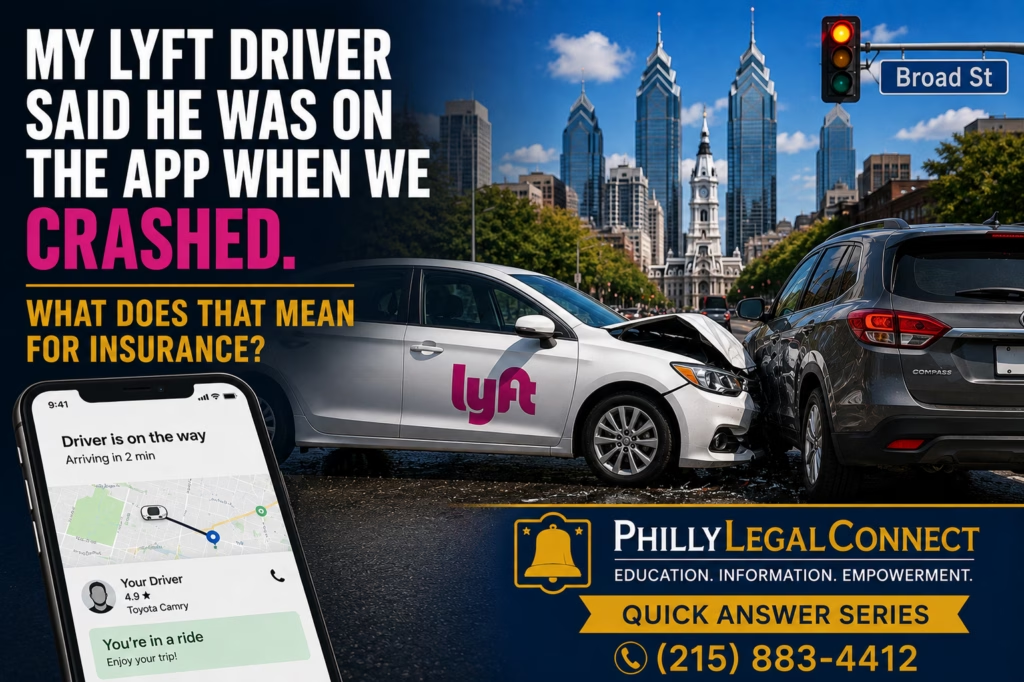
Part of the PhillyLegalConnect Quick Answer Series
Simple answers to common accident, insurance, and injury questions affecting Philadelphia, Pennsylvania, South Jersey, and the Jersey Shore.
Quick Answer
If your Lyft driver was on the app when an accident occurred, that app status can be important in determining what insurance coverage may apply.
Lyft uses different insurance coverage periods depending on what the driver was doing when the accident happened. If the driver had accepted your ride and you were already a passenger, the trip should generally fall within Lyft’s “ride in progress” period.
After a collision, take care of your health first, document the accident if you safely can, save your Lyft trip information, obtain information about the drivers and vehicles involved, and report the accident to Lyft.
Key Takeaways
- A Lyft driver’s app status can affect which insurance coverage may apply after an accident.
- There is an important difference between a driver merely being logged into Lyft and a driver who has accepted a ride or is transporting a passenger.
- Lyft states that during passenger pickup and an active ride, it maintains at least $1 million in third-party automobile liability coverage in most markets for covered accidents.
- Other insurance may also become relevant depending on who caused the crash and the circumstances.
- Save your Lyft trip receipt, driver information, screenshots, photographs, and other accident information.
- Lyft provides a process for reporting accidents involving its platform.
- Multiple insurance companies can sometimes become involved in a rideshare accident claim.
Why Does It Matter That My Lyft Driver Was on the App?
Lyft does not treat every moment that a driver uses its platform the same way for insurance purposes.
The driver’s status at the time of the collision can be important.
Generally, there are different stages:
- The Lyft app is off.
- The driver is logged into the app and waiting for a ride request.
- The driver has accepted a ride and is traveling to pick up the passenger.
- The passenger has been picked up and the Lyft ride is in progress.
Lyft describes different insurance coverage depending upon which stage applies.
If you were already sitting in the Lyft and traveling to your destination when the crash happened, your situation is different from an accident involving a Lyft driver who was simply logged into the app waiting for someone to request a ride.
What Insurance May Apply If I Was Already a Lyft Passenger?
If your driver had already picked you up and your Lyft trip was underway, Lyft states that it maintains insurance for covered accidents during that portion of the ride.
According to Lyft’s current insurance information, when a driver is picking up a passenger or completing a ride, Lyft maintains at least $1 million in third-party automobile liability coverage in most markets.
Lyft also states that first-party coverages may be available depending upon the circumstances and applicable law. These may include uninsured or underinsured motorist coverage, PIP, or medical-payment coverage.
Exactly which coverage applies to a particular accident can depend on where the collision occurred, who caused it, the insurance policies involved, and the facts surrounding the accident.
What If Another Driver Caused the Lyft Accident?
The fact that you were riding in a Lyft does not necessarily mean that your Lyft driver caused the collision.
Another driver could be responsible.
For example, another vehicle could:
- Rear-end the Lyft.
- Run a red light or stop sign.
- Make an unsafe turn.
- Change lanes into the Lyft.
- Strike the Lyft while distracted or speeding.
That can introduce another driver’s automobile insurance into the claim.
Depending upon the circumstances, there may therefore be several potentially relevant insurance policies or sources of coverage.
What Should I Save From the Lyft App?
Your Lyft trip information may help document that you were an active passenger when the collision occurred.
If possible, preserve:
- Your Lyft trip receipt
- The driver’s name
- Vehicle information
- Pickup location
- Destination
- Approximate time of the trip
- Screenshots of the ride in the Lyft app
- Emails or notifications concerning the ride
- Any communications from Lyft after the accident
You should also preserve photographs, witness information, police information, medical records, and other materials relating to the collision.
Do not assume that information available through an app today will necessarily be as easy to retrieve months later.
Should I Report the Accident to Lyft?
Yes, a Lyft passenger involved in a collision should generally make sure the accident is reported to Lyft.
Lyft provides an accident-reporting process and states that its Claims Customer Care team handles reports involving collisions.
Reporting the accident can also help create a record connecting the collision with the particular Lyft trip.
If the accident is an emergency, call 911 first.
What If My Lyft Driver Says He Wasn’t on the App?
Do not rely solely on someone’s recollection of what the driver’s status was.
If you requested the ride through Lyft and were already being transported when the accident occurred, preserve the information showing your trip.
Your Lyft receipt, trip history, pickup information and other electronic records may become important in establishing when the ride began and whether it was still underway when the collision occurred.
The Bottom Line
If you were riding in a Lyft when an accident happened, the driver’s status in the Lyft app can matter because Lyft’s insurance coverage changes depending upon what the driver was doing at the time.
A driver simply waiting for a ride request is not in the same insurance period as a driver who has accepted a passenger or is completing an active ride.
If you were already a passenger, save your Lyft trip information, document the collision, seek appropriate medical care, and make sure the accident is properly reported.
Rideshare accident claims can become more complicated when several drivers and insurance companies are involved.
Need Help After a Philadelphia Lyft Accident?
If you were injured while riding in a Lyft, you may have questions about the driver’s app status, available insurance, medical bills, who caused the accident, or what you should do next.
PhillyLegalConnect provides educational information to help passengers and accident victims better understand these issues.
When legal representation is needed, PhillyLegalConnect connects readers directly with The Oakes Firm — Philadelphia Injury Lawyers.
Speak Directly With The Oakes Firm
Free Rideshare Accident Consultation. No fee unless there is a recovery.
Visit The Oakes Firm’s Philadelphia Rideshare Accident Guide
Related PhillyLegalConnect Quick Answers & Guides
- My Uber Driver Crashed. Who Pays?
- Does Uber’s Insurance Cover Passengers After a Crash?
- Who Pays My Medical Bills After an Uber Accident?
- Do I Need a Lawyer After an Uber Accident?
- The Insurance Company Wants a Recorded Statement. Do I Have to Give One?
Continue Learning
- Uber & Lyft Accidents Hub
- Philadelphia Injury Playbook
- What To Do After an Accident in Philadelphia
- Philadelphia Neighborhood Safety
What To Do Next
If you were a passenger in a Lyft accident:
Understand your options. If you have questions about an injury claim or which insurance may apply, you can speak directly with The Oakes Firm.ends on its individual facts and applicable law.
Take care of your health first. Seek appropriate medical attention for injuries or symptoms.
Save the Lyft trip information. Preserve your receipt, screenshots, driver’s information and other records showing the ride.
Document the accident. Keep photographs, witness information, vehicle information, police information and medical records.
Report the collision. Make sure the accident is properly reported to Lyft and, when appropriate, law enforcement.
Be careful with insurance communications. A rideshare collision can involve more than one insurance company. Understand who is contacting you and why before providing detailed or recorded statements.
About PhillyLegalConnect
PhillyLegalConnect was created to help individuals and families better understand accidents, insurance, injury claims, and safety issues affecting Philadelphia, South Jersey, and the Jersey Shore.
Our mission is to explain complicated legal and insurance topics in clear, practical language so readers can make informed decisions after an accident or injury.
About the Author
Thomas G. Oakes has more than four decades of experience working in and around Pennsylvania and New Jersey courtrooms. Throughout his career, he worked with attorneys, judges, and litigation teams, gaining firsthand insight into how accident and injury claims are investigated, documented, and presented.
Today, he serves as editor of PhillyLegalConnect, developing educational resources that help readers better understand accident, insurance, and personal injury topics.
Continue Learning
Explore more educational resources from PhillyLegalConnect:
Need Legal Guidance?
If you may need legal representation after an accident, learn more about The Oakes Firm.
Call (215) 883-4412
Connect With The Oakes Firm →Learn more about the purpose of this site on our About PhillyLegalConnect page.