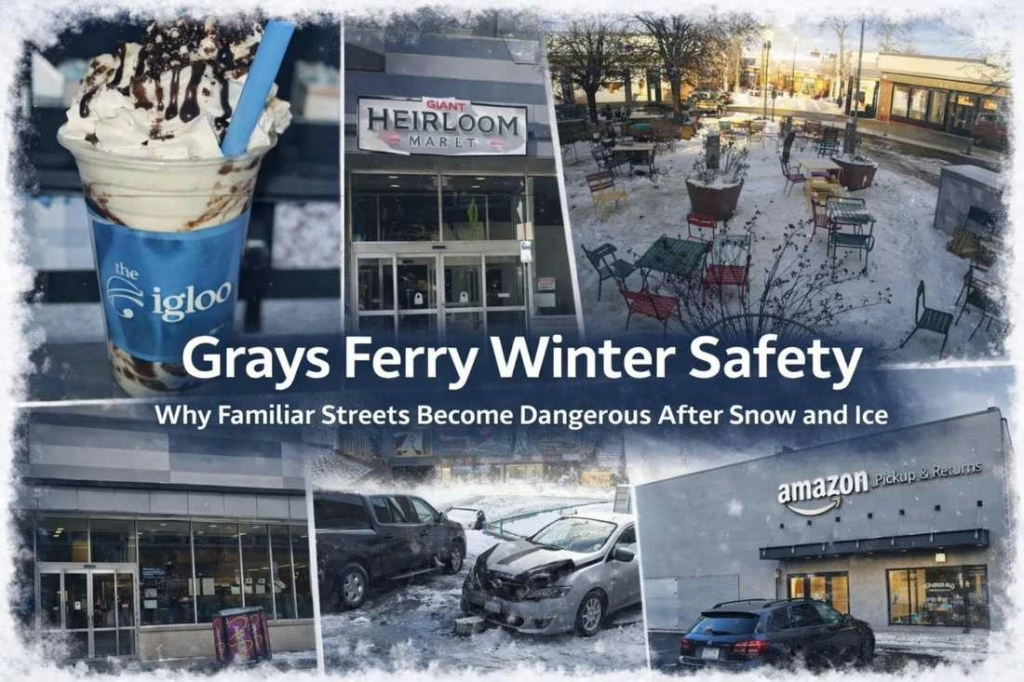
Winter conditions in Grays Ferry Philadelphia create hidden pedestrian and traffic dangers—especially along Grays Ferry Avenue, around the Triangle near South Street, and near high-delivery areas like Heirloom, South Street Market, Amazon, Grace Tavern, and nearby retail corridors. Snowmelt that refreezes overnight, narrowed lanes, delivery congestion, and uneven sidewalks can turn everyday routes into serious hazards—often when people least expect it. That’s why understanding Grays Ferry winter safety is more important than ever during these months.
This guide covers Grays Ferry winter safety risks after snow and ice—especially near Grays Ferry Avenue and the Triangle.
Grays Ferry Philadelphia is a neighborhood of big streets, small streets, large and small alleys…some where cars have access, some you can barely fit your trash cans through to get them to the street for pick up.
Key Takeaways
- Grays Ferry Avenue traffic patterns narrow into a one-lane southbound route near Heirloom.
- Delivery vehicles, trucks, and local traffic converge near the Triangle year-round.
- Winter freeze-thaw cycles create invisible ice hazards overnight.
- Pedestrians are often pushed closer to moving traffic during snow and ice conditions.
- Familiar neighborhood routes can become the most dangerous in winter
My grandkids love going to Igloo in Grays Ferry during the warmer months. In the spring and summer, the Triangle feels lively and open—people walking, sitting outside, enjoying the neighborhood.
In the winter, it’s a completely different experience. You’re not sitting outside. You’re navigating ice, snow, curb cuts, traffic bottlenecks, and stop-and-go vehicles in tight pedestrian spaces. What feels familiar in July can become genuinely dangerous in January.
About Grays Ferry
Grays Ferry is a South Philadelphia neighborhood roughly bounded by the Schuylkill River to the west, 25th Street to the east, Grays Ferry Avenue to the north, and Vare Avenue to the south. Major corridors like Grays Ferry Avenue, 25th Street, and nearby connectors carry steady commuter, delivery, and local traffic—especially around the Triangle area near South Street, where several streets converge into tight pedestrian and vehicle spaces.
This article focuses on winter walking/driving risks around Grays Ferry Avenue and the South Street Triangle area.
See our blog post: Staying Safe in Grays Ferry: Injury Risks, Local Landmarks & Legal Help You Can Trust
Why Winter Changes Everything in Grays Ferry
Grays Ferry is a neighborhood defined by movement. Cars, buses, delivery vehicles, cyclists, and pedestrians all share a relatively tight corridor—especially as Grays Ferry Avenue winds north-to-south through the area and funnels activity toward the Triangle.
During the day, sun melts snow and slush along sidewalks, curb ramps, and intersections. Overnight, temperatures drop and everything refreezes. By morning, surfaces that looked clear the night before can become slick without warning.
These aren’t abstract risks. They happen where people live, shop, and walk every day.
Grays Ferry Winter Safety: Where Risks Spike Near the Triangle
The Triangle near South Street is one of the most active areas in the neighborhood. Multiple streets converge here, including Grays Ferry Avenue and smaller arterial streets that feed pedestrian and vehicle traffic into the same compact space.
In warmer months, outdoor seating, foot traffic, and storefronts make the area inviting. In winter, that same layout becomes far less forgiving.
You often see:
- Pedestrians crossing at irregular angles
- Vehicles navigating tight turns and merges
- Snow pushed toward curb edges and crosswalks
- Ice forming where sidewalks meet the street
With winter coats, shopping bags, and uneven footing, reaction time drops. A simple misstep can lead to a serious fall—or a pedestrian-vehicle incident. The danger spikes at dusk and early morning when meltwater refreezes into black ice at corners and curb ramps.
Grays Ferry Winter Safety: Snow, Ice, and Narrowed Walking Routes
Heirloom, Grace Tavern, and Nearby Stores
Many residents walk to Heirloom Market, Grace Tavern, Amazon Locker for their pickups and nearby shops like South Street Market.
Carrying groceries, food and packages while navigating curb cuts, crosswalks, and uneven pavement already requires attention. In winter:
- Snowbanks block curb access
- Ice hides beneath slush
- Sightlines tighten at intersections
- Assume every curb cut is icy
- Cross only at full signal cycles
- Step down like you’re on stairs
These conditions increase fall risk—especially for seniors and families.
Grays Ferry Winter Safety: The Triangle and High-Risk Walking Routes
Just beyond the Triangle, delivery activity increases dramatically. Vans, trucks, and cars pull in and out of compact loading zones, including areas near the Amazon Locker location.
Drivers are focused on timing and access. Pedestrians are focused on footing.
In winter, this becomes a maze:
- Vehicles stopping abruptly
- Limited clearance between lanes
- Snow narrowing already tight spaces
- Pedestrians forced closer to moving traffic
- Philadelphia Vision Zero – Street Safety Program
This mix is especially dangerous after dark or during early morning hours when refreezing is most severe. There are many dangerous intersections in Philadelphia. This link provides you with a full digest of Philadelphia’s most dangerous intersections.
Grays Ferry Avenue’s Traffic Pattern: Why It Matters
Grays Ferry Avenue carries two-way traffic until you reach the area near Heirloom. At that point, traffic reroutes into a single southbound lane, forcing vehicles to slow, merge, and snake through a compressed stretch of roadway.
That route connects traffic moving toward:
- University City
- Southwest Philadelphia
- I-76
- South Philly via Moyamensing Avenue
- Walt Whitman Bridge
Commuters, delivery vehicles, and local drivers all share constrained space—often while pedestrians navigate icy curb cuts and crossings.
From Devil’s Pocket to the Triangle: Neighborhood Arteries Matter
Grays Ferry doesn’t exist in isolation. From Devil’s Pocket—at the corner of Grays Ferry and Catharine Streets across from Naval Square—the avenue pulls traffic northward through a web of smaller streets.
Grays Ferry winter safety starts with assuming every curb ramp, crosswalk corner, and delivery-zone edge may be icy after sunset and before mid-morning.
Pedestrian routes cross or intersect with streets like:
- Bainbridge Street
- Fitzwater Street
- St. Albans Street, known for its appearance in The Sixth Sense
Each of these arteries feeds people and vehicles toward the Triangle. In winter, every merge point becomes more hazardous.
How Ice Forms Overnight in Grays Ferry
One of the most dangerous winter factors is overnight refreezing.
Snow melts during the day—especially near intersections, curb ramps, and delivery zones. When temperatures drop, that moisture freezes again, often thin and nearly invisible.
Ice often forms first:
- curb ramps
- accessible curb ramps (ADA)
- storm drains
- corners/shaded spots
- sloped sidewalks
Morning pedestrians may not realize conditions have changed until they lose footing.
What to Do If You’re Injured in Grays Ferry During Winter
If you slip, fall, or are struck by a vehicle:
- Report the incident (property manager/store/city) and write down who you spoke with.
- Get medical attention—even if injuries seem minor
- Take photos of the area, including ice, snow, or obstructions
- Note the exact location and time
- Avoid assuming fault before understanding what caused the hazard
- Report hazardous conditions to the City (311) and document the location
Winter accidents often involve conditions that change quickly. Documentation matters.
See our post, Philadelphia Injury Playbook. Just click! A comprehensive guide
Why Local Knowledge Matters After an Accident
Every Philadelphia neighborhood has its own risks. Grays Ferry’s traffic flow, delivery congestion, pedestrian routes, and winter patterns are unique.
Understanding how and why these hazards exist is critical when evaluating what happened and what steps to take next.
Get Connected
If you or a family member is injured while walking or navigating traffic in Grays Ferry during winter conditions, getting the right guidance early matters.
Use the Get Connected option to speak with The Oakes Firm and understand your next steps.
Explore More Philadelphia Injury Resources
Whether you’re researching accident prevention, neighborhood safety concerns, or what to do after an injury, PhillyLegalConnect offers a growing collection of guides designed to help Philadelphia residents, commuters, visitors, and families stay informed.
- The Philadelphia Injury Playbook — Step-by-step guidance on what to do after an accident, protecting your rights, documenting injuries, and understanding the claims process.
- Philadelphia Neighborhood Safety Hub — Explore neighborhood-specific traffic concerns, dangerous intersections, pedestrian safety issues, and local accident trends throughout Philadelphia.
- Jersey Shore Personal Injury Guide — Safety information and injury resources covering the Jersey Shore, including Wildwood, Ocean City, Avalon, Sea Isle City, Cape May, and surrounding shore communities.
These cornerstone guides are continually updated with new articles, safety resources, local information, and educational content to help individuals and families make informed decisions after an accident or injury.
Read More Philadelphia Memories
From South Philly traditions and neighborhood landmarks to childhood games, food, and family stories, explore more memories at the Philadelphia Nostalgia Hub.
Frequently Asked Questions
Why is Grays Ferry more dangerous in winter?
Because heavy traffic, lane re-routing, delivery congestion, and overnight ice combine in a compact area.
Where do most pedestrian risks occur?
Near the Grays Ferry Triangle, South Street intersections, delivery zones, and rerouted traffic lanes.
Does ice form even if sidewalks look clear?
Yes. Melted snow often refreezes overnight, creating invisible ice.
Are delivery vehicles a factor in winter accidents?
Yes. Increased delivery activity and limited space raise pedestrian-vehicle conflict risks.
What should I do after a slip-and-fall or pedestrian accident?
Get medical care first, document conditions if possible, and seek guidance before assuming fault.