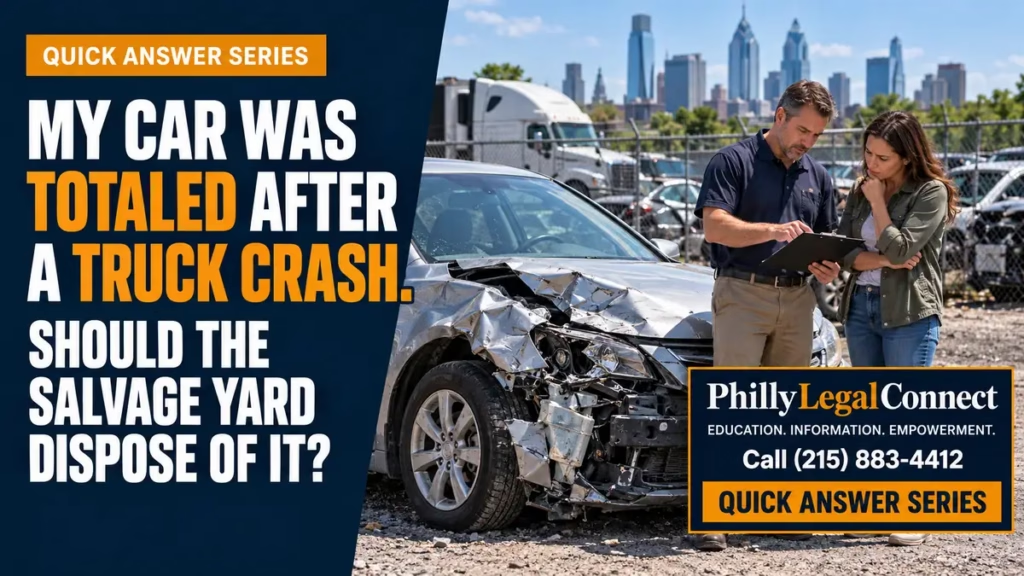
If your car was totaled after a truck crash, confirm whether it needs inspection or preservation before authorizing the salvage yard to dispose of it.
Part of the PhillyLegalConnect Quick Answer Series
Simple answers to common accident, insurance, and injury questions affecting Philadelphia, Pennsylvania, South Jersey, and the Jersey Shore.
Quick Answer
Do not authorize a salvage yard to destroy or dispose of a vehicle from a serious truck crash until you understand whether it may contain important evidence. Photograph the vehicle, obtain the towing and storage information, and seek prompt guidance about inspection or preservation. At the same time, do not ignore storage charges or assume the vehicle must be kept indefinitely.
Key Takeaways
- A totaled vehicle may contain physical evidence about the collision.
- Disposal or destruction may make a later inspection impossible.
- Identify the vehicle’s location, condition, and storage charges promptly.
- Do not remove or alter components that may be relevant.
- Preservation decisions should be made quickly and with attention to continuing costs.
Why Might the Totaled Vehicle Matter After a Truck Crash?
The damage pattern may help show the direction and force of impact. The vehicle may also contain event data, restraint-system information, damaged seats, tires, lights, or other components that could become important when the crash or injuries are disputed.
Photographs are useful, but they may not capture everything a qualified inspection could identify. Once the vehicle is crushed, dismantled, or sold for parts, that opportunity may be lost.
What Should I Check If My Car Was Totaled After a Truck Crash?
If your car was totaled after a truck crash, ask where it is stored, who controls it, whether title has transferred, what disposal authorization is being requested, and what storage charges are accumulating. Request copies of towing, storage, total-loss, and disposal documents.
Do not assume the insurance company, towing company, or salvage yard is preserving the vehicle for an injury investigation. Make your position clear in writing while appropriate next steps are being evaluated.
Does the Vehicle Have to Be Stored Indefinitely?
No universal storage period applies to every situation. Keeping a vehicle can create substantial charges, and an inspection may not be necessary in every claim. The decision should consider the seriousness of the injuries, disputed facts, available photographs, insurance arrangements, and potential need for expert examination.
What To Do Next
- Obtain the salvage yard’s name, address, and vehicle-identification information.
- Photograph the vehicle and preserve existing crash photographs.
- Request all total-loss, towing, storage, and disposal documents.
- Do not authorize destruction until the preservation question is evaluated.
- Seek prompt guidance while monitoring storage charges and deadlines.
Editor’s Note: This Quick Answer addresses the immediate decision whether to authorize disposal of a vehicle after a truck crash. Evidence-preservation duties, ownership, inspection needs, and storage responsibilities depend on the circumstances.
Speak Directly With The Oakes Firm
When a vehicle may contain evidence from a serious truck collision, The Oakes Firm can review the crash, available photographs, storage situation, and need for timely inspection or preservation.
Visit The Oakes Firm’s Philadelphia Truck Accident Guide →
Free consultation. No fee unless there is a recovery.
Call (215) 883-4412
Related PhillyLegalConnect Quick Answers
- I Didn’t Call the Police After My Car Accident. Can I Still Make a Claim?
- How Do I Get a Philadelphia Police Accident Report?
- Can I Settle My Car Damage Claim Without Settling My Injury Claim?
Related PhillyLegalConnect Resources
- Five Essential Photos to Take After a Car Accident
- Philadelphia Injury Playbook
- What to Do After an Accident in Philadelphia
About PhillyLegalConnect
PhillyLegalConnect was created to help individuals and families better understand accidents, insurance, injury claims, and safety issues affecting Philadelphia, South Jersey, and the Jersey Shore.
Our mission is to explain complicated legal and insurance topics in clear, practical language so readers can make informed decisions after an accident or injury.
About the Author
Thomas G. Oakes has more than four decades of experience working in and around Pennsylvania and New Jersey courtrooms. Throughout his career, he worked with attorneys, judges, and litigation teams, gaining firsthand insight into how accident and injury claims are investigated, documented, and presented.
Today, he serves as editor of PhillyLegalConnect, developing educational resources that help readers better understand accident, insurance, and personal injury topics.
Continue Learning
Explore more educational resources from PhillyLegalConnect:
Need Legal Guidance?
If you may need legal representation after an accident, learn more about The Oakes Firm.
Call (215) 883-4412
Connect With The Oakes Firm →Learn more about the purpose of this site on our About PhillyLegalConnect page.