Supermarket shopping in Philadelphia and South Jersey can feel like an adventure. Whether you’re grabbing a few items at ACME, doing a full run at ShopRite, stopping at Giant or Sprouts, or treating yourself at a specialty spot like Rastelli’s, the pace is the same: crowded aisles, constant restocking, and shoppers focused on finding what they need—not what’s on the floor. Unfortunately, this can sometimes lead to a supermarket slip and fall in Philadelphia.
And now with self-checkout, fewer staffed lanes, and stores that move products around (so you walk more aisles), it’s easy to miss hazards—especially when you’re looking up at shelves or down at your phone scanning items.
Accidents can happen anywhere: the produce aisle, the freezer section, the bakery, or even right outside in the parking lot.
Key Takeaways
- Most supermarket injuries happen in ordinary places: produce, freezer aisles, end caps, and crowded “stocking zones.”
- Self-checkout changes attention—people look at screens, scan items, and miss spills or clutter near their feet.
- Parking lots are part of the risk: pedestrian crossings, carts, reversing cars, and tight lanes cause hits and fender-benders.
- “Spill in Aisle 5” isn’t a joke—spills and melted freezer leaks can be invisible until it’s too late.
- After any supermarket accident, document, report, and get medical attention if you’re hurt—then talk to a qualified Philadelphia trial lawyer.
Why Supermarkets Create More Slip-and-Fall Risk Than People Expect
Supermarkets are built for motion: people walking fast, carts turning corners, employees stocking shelves, and shoppers scanning labels at eye level.
Common factors that make supermarkets riskier than they seem:
- Crowded aisles and narrow cart lanes, especially during rush hours and weekends
- Employees stocking shelves (boxes, pallets, flat carts, and open cases in the aisle)
- Products moved to new locations, forcing shoppers to “hunt,” backtrack, and look up and around more
- Longer waits for service (deli, bakery, seafood), creating standing clusters and congested choke points
- Fewer bags or no-bag policies, leading shoppers to carry more—reducing balance and visibility
- Self-checkout lines backing up, with people stepping sideways to let others pass (right where spills and clutter accumulate)
When everyone’s attention is on shopping, scanning, or maneuvering around others, a hazard only needs a moment to cause harm.
The Most Common Hazards: “Spill in Aisle 5” and Everything Like It
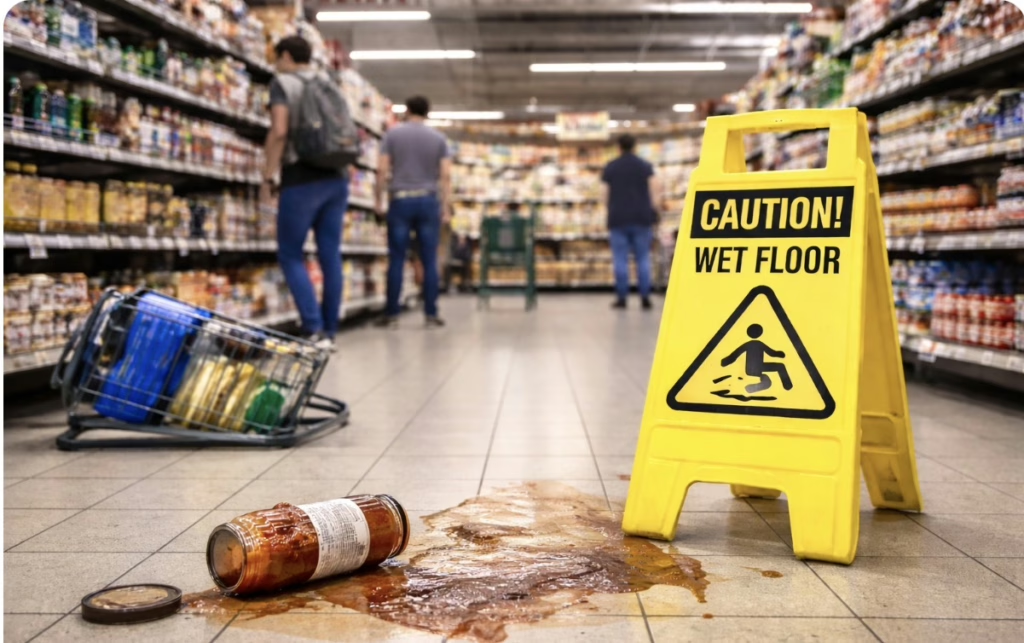
We all know the PA announcement: “Cleanup in Aisle 5.” The reality is—spills are common, and many are hard to see.
Typical in-store hazards
- Produce moisture (misted greens, dropped grapes, bruised fruit)
- Freezer section drips (melting items, condensation, leaky packages)
- Deli/bakery areas (grease, crumbs, wet tile near beverage or ice areas)
- End caps and displays (items falling, cardboard on the floor, unstable stacks)
- Stocking clutter (open boxes, shrink wrap, restock carts partially blocking the aisle)
- Floor mats that slide or curl at entrances on rainy or snowy days
“Looking up” injuries happen too
Accidents aren’t only about slipping. People get hurt when:
- Shoppers reach too high and pull items down
- Items fall from shelves or unstable displays
- Heavy bulk goods shift when someone tries to lift them without room
Self-Checkout: A New Injury Hotspot (Because Attention Shifts)
Self-checkout is convenient—until it isn’t.
When shoppers are scanning, bagging (often without bags), watching the screen, and rushing to clear the station, they’re not scanning the floor. That increases the chance of stepping onto a wet spot, a dropped item, or a slick patch near the stations.
Self-checkout areas can also create:
- Tight turns with carts
- Crowded lines
- Blocked walkways (people moving around payment screens and bagging shelves)
In short: more movement, less awareness, more risk.
Shopping Centers and Parking Lots: Where A Lot of Accidents Really Happen
Supermarkets and big-box stores need parking lots, and those lots become mini roadways with constant cross-traffic.
Common parking-lot accident scenarios:
- A driver backs out while a pedestrian walks behind the vehicle
- Shoppers cross lanes at unmarked crossing points
- Cars fight for spaces and cause fender-benders
- Carts roll into vehicles or people
- Poor lighting makes hazards harder to see (especially in winter)
This is even more pronounced at superstores and bulk retailers like BJ’s, Costco, and Sam’s, where larger carts, larger loads, and longer walking distances increase risk.
And when stores include pharmacies, pizza counters, sandwich shops, and in-store dining, there’s simply more foot traffic—more trips to the car, more people crossing lanes, and more opportunity for something to go wrong.
What To Do After a Supermarket Slip, Fall, or Parking Lot Accident
If you’re injured, the steps you take right away can matter.
Step-by-step checklist
- Report it immediately to a manager and ask that an incident report be created.
- Take photos/video of the hazard, the exact area, the lighting, and any warning signs (or lack of them).
- Get names and contact info for witnesses who saw what happened.
- Preserve what you can: receipts, timestamps, store location, and key details (like a freezer aisle leak).
- Get medical attention—even if you think you’re “just sore.”
- Avoid guessing or arguing on the scene. Stick to facts.
- If you need legal guidance, PhillyLegalConnect can help connect you with a qualified Philadelphia trial lawyer
Core PhillyLegalConnect Resources
Explore PhillyLegalConnect’s primary guides for rideshare accidents, South Jersey and Jersey Shore injuries, and practical steps to take after an accident.
Philadelphia Neighborhood Safety • Philadelphia Nostalgia • About PhillyLegalConnect • Home
Need legal representation after an accident?
Get Connected With The Oakes Firm →FAQs: Supermarket Accidents in Philadelphia & South Jersey
What should I do if I slip in an ACME or ShopRite in Philadelphia?
Report it immediately, document the hazard with photos, get witness info, and seek medical care if you’re hurt.
Are freezer-section leaks a common cause of slips?
Yes. Melted items, condensation, and leaky packaging can create slick, hard-to-see patches on the floor.
Can I be injured at self-checkout even if I didn’t “fall”?
Yes. People can trip, twist knees, strain backs, or get hit by carts in congested self-checkout areas.
Do parking lot accidents at shopping centers count as injury claims?
They can. Pedestrian impacts and certain vehicle incidents may create legal options depending on the facts.
Why do supermarkets keep moving products around?
Stores often reorganize aisles to increase browsing and sales, which can increase foot traffic and shopper distraction.
What if I fell because the aisle was crowded or blocked by stocking carts?
Crowding and stocking activity can contribute to unsafe conditions. Document the scene and report it right away.
About the Author — Thomas G. Oakes
Thomas G. Oakes is a lifelong Philadelphian and the founder of PhillyLegalConnect.com and PhillyLegalNews.com. With more than 45 years of experience in the legal field, Tom served as an official court reporter in the Philadelphia courts and spent decades as a freelance reporter in both state and federal litigation.
He is a nationally recognized leader in courtroom technology, a certified TrialDirector trainer, and has taught lawyers, judges, and law students across the country — including at Temple University’s LL.M. in Trial Advocacy program and through major legal organizations such as the FDCC, IADC, and ABA. Tom has also lectured for the Delaware County Bar Association, the Gloucester County Bar Association in New Jersey, and presented for The Legal Intelligencer at Philadelphia’s Union League and other venues, speaking on trial technology, visual advocacy, and modern courtroom presentation.
Through PhillyLegalConnect and PhillyLegalNews, Tom blends his courtroom experience, technology expertise, and deep Philadelphia roots to help injured individuals and their families better understand the legal system — and connect with trusted trial lawyers when it matters most.
To read more about the author, visit the full biography here: https://phillylegalnews.com/about-the-editor/
Disclaimer
PhillyLegalConnect is not a law firm and does not provide legal advice. The information on this website is for educational purposes only and does not create an attorney–client relationship. If you need legal advice about a personal injury matter, we can help connect you with qualified Philadelphia trial lawyers who can evaluate your case.