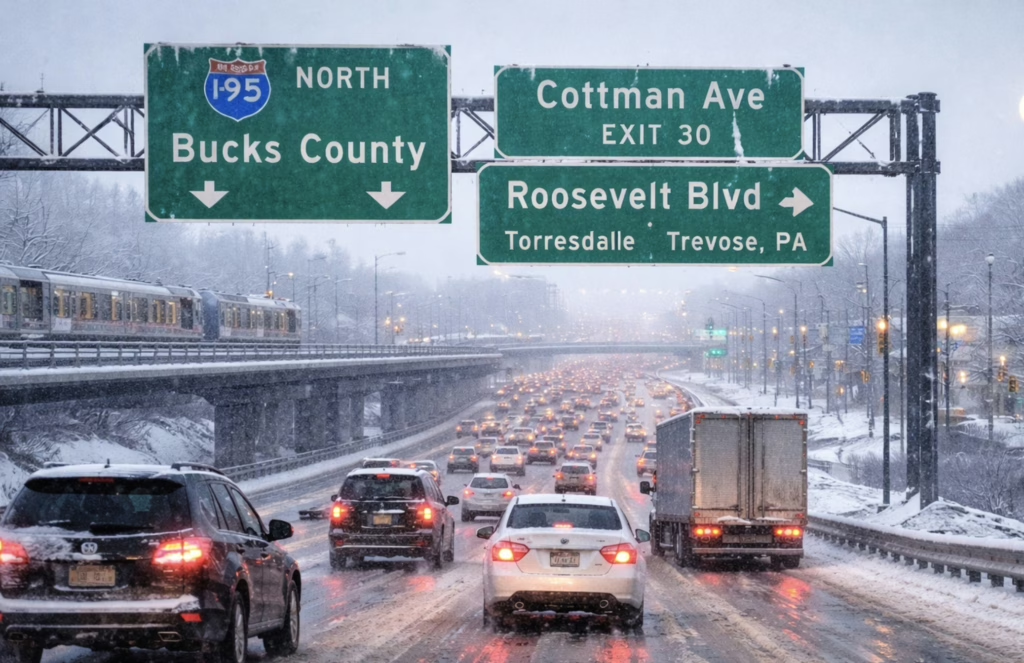
Winter in Northeast Philadelphia drives differently than most people expect. On a normal weekday, I-95 heading north is packed with cars, trucks, and buses — and when you add construction plus rain, sleet, or snow, parts of the roadway can feel like a skating rink.
The same thing happens on major Northeast connectors like Cottman Avenue (Route 73 on Google Maps) and County Line Road, especially where they cross or feed into Roosevelt Boulevard. The Boulevard becomes heavily congested with commuters — and when drivers try to “catch the light” to avoid stopping, you get the exact mix that causes serious wrecks: speed + tight traffic + slick roads.
If you were hurt in a winter crash in Northeast Philly — whether it seemed “minor” or life-changing — here’s a practical, Philadelphia-specific guide on what to do next.
Key Takeaways
- I-95, Roosevelt Boulevard, Cottman Ave (73), and County Line Road become higher-risk corridors when winter weather hits and traffic stays heavy.
- After a crash, medical care and documentation (photos, reports, witnesses) matter most.
- Winter collisions often involve chain-reaction rear-enders, lane-change impacts, and intersection crashes caused by sliding.
- Don’t assume you’re “fine.” Many winter injuries show up hours or days later.
- If you need help, you can get connected with The Oakes Firm for an evaluation.
Why Winter Driving Is Riskier in Northeast Philadelphia
Northeast Philly isn’t just “city streets.” It’s a network of high-volume commuter routes that stay busy even during bad weather.
A few reasons winter crashes spike here:
- I-95 North carries nonstop commuter traffic plus trucks and buses. Add construction zones, and braking distances get tight fast.
- Roosevelt Boulevard is known for high crash volume — congestion plus aggressive timing at lights creates risky behavior.
- Cottman Avenue (73) and County Line Road funnel traffic toward the Boulevard and I-95, increasing merge and stop-and-go risks.
- Philly winters often create black ice, especially early morning, at dusk, and after slush refreezes.
And Northeast Philly isn’t just roads — it’s neighborhoods with real daily life: Torresdale, Mayfair, Bustleton, Pennypack, and others, each with schools, shopping centers, restaurants, and crowded parking lots where winter fender-benders happen constantly.
Common Winter Crash Scenarios (and Why They Happen)
Winter crashes in Northeast Philadelphia often follow familiar patterns:
1) Chain-Reaction Rear-End Crashes
Stop-and-go congestion plus slick pavement turns one “tap” into a multi-car pile-up.
2) Sliding Through Lights and Intersections
When drivers speed up to catch lights on Roosevelt Boulevard or major cross routes, a brief slide can turn into a broadside impact.
3) Lane-Change and Merge Collisions
I-95 on-ramps, merges, and construction lanes force quick decisions — and winter reduces traction and visibility.
4) Parking Lot Accidents
Shopping centers, commuter stations, and retail corridors become hazard zones with icy lanes, poor visibility, rushed drivers, and pedestrians between cars.
What To Do After an Icy Crash in Northeast Philadelphia
Here’s a simple checklist you can follow — even if you’re shaken up:
Step 1: Get to Safety, Then Call 911 if Needed
If vehicles can move, get out of active lanes. If anyone is hurt, call emergency services.
Step 2: Take Photos and Video
If it’s safe, capture:
- vehicle positions
- skid marks, slush, or ice patches
- traffic lights and signage
- damage close-ups
- road conditions and visibility
Step 3: Get Witness Information
Winter crashes happen fast. If someone saw what happened, get a name and phone number.
Step 4: Seek Medical Care — Even If You Feel “Okay”
Cold weather and adrenaline can mask injuries. Common winter crash injuries include:
- neck and back strain
- concussions
- knee or shoulder injuries from bracing
- aggravated prior injuries
Step 5: Write Down What You Remember
Where were you? What lane? What did the light show? Was there slush or ice? These details matter later.
Step 6: Be Careful With Recorded Statements
Insurance companies may call quickly. Be polite — but don’t guess, speculate, or minimize symptoms.
Northeast Philly Transit Adds Another Winter Risk Layer
Many Northeast Philadelphia commuters use local trains and stations to reach Center City — and winter hazards don’t stop once you’re off the road.
Parking lots and walkways around stations can create:
- fender-benders in icy lots
- slips and falls on stairs and sidewalks
- crowded platforms with slick surfaces
Complex junctions like Five Points can feel like you need eyes in the back of your head — especially when visibility drops and drivers rush.
The Northeast Is a Connected Region — Accidents Don’t Stay “Local”
Travel through Northeast Philadelphia often connects drivers to Bucks County and nearby communities, and through routes toward Jenkintown and Elkins Park.
In winter, that regional flow matters. Crashes often happen:
- during cross-county commutes
- along connector roads
- where suburban traffic meets city congestion
When Winter Weather Explains a Crash — But Doesn’t Excuse It
A common myth is: “It was snowing, so nobody’s at fault.”
In reality, winter conditions often mean drivers must be more careful, not less. Speeding, tailgating, unsafe lane changes, distracted driving, and aggressive “beat the light” behavior can still create liability — even when roads are icy.
What Help Is Available After a Winter Crash in Northeast Philadelphia
👉 Get connected with The Oakes Firm
Get Connected With The Oakes Firm
Wherever your incident happened, help is available.
Get ConnectedYour First Call for Injury Law — (215) 883-4412
Frequently Asked Questions
What should I do first after a winter crash in Northeast Philadelphia?
Get medical help if needed, move to safety if possible, document the scene with photos/video, and report the crash.
Are winter accidents on Roosevelt Boulevard “no-fault” because of weather?
No. Weather may be a factor, but speeding, tailgating, unsafe turns, and distracted driving can still create liability.
Should I see a doctor even if I feel okay?
Yes. Many winter crash injuries appear later, especially neck, back, and concussion symptoms.
Do parking lot accidents count the same as road accidents?
They can. Insurance claims and injuries still apply. Documentation matters.
What if my crash happened near a train station or commuter lot?
Those areas often involve layered hazards — cars, pedestrians, and slick walkways. Document everything and seek care.
About the Author — Thomas G. Oakes
Thomas G. Oakes is a lifelong Philadelphian and the founder of PhillyLegalConnect.com and PhillyLegalNews.com. With more than 45 years of experience in the legal field, Tom served as an official court reporter in the Philadelphia courts and spent decades as a freelance reporter in both state and federal litigation.
He is a nationally recognized leader in courtroom technology, a certified TrialDirector trainer, and has taught lawyers, judges, and law students across the country — including at Temple University’s LL.M. in Trial Advocacy program and through major legal organizations such as the FDCC, IADC, and ABA. Tom has also lectured for the Delaware County Bar Association, the Gloucester County Bar Association in New Jersey, and presented for The Legal Intelligencer at Philadelphia’s Union League and other venues, speaking on trial technology, visual advocacy, and modern courtroom presentation.
Through PhillyLegalConnect and PhillyLegalNews, Tom blends his courtroom experience, technology expertise, and deep Philadelphia roots to help injured individuals and their families better understand the legal system — and connect with trusted trial lawyers when it matters most.
To read more about the author, visit the full biography here: https://phillylegalnews.com/about-the-editor/
Disclaimer
PhillyLegalConnect is not a law firm and does not provide legal advice. The information on this website is for educational purposes only and does not create an attorney–client relationship. If you need legal advice about a personal injury matter, we can help connect you with qualified Philadelphia trial lawyers who can evaluate your case.