A South Philly Memory
What do longtime South Philadelphians remember about soft pretzels and the pretzel man?
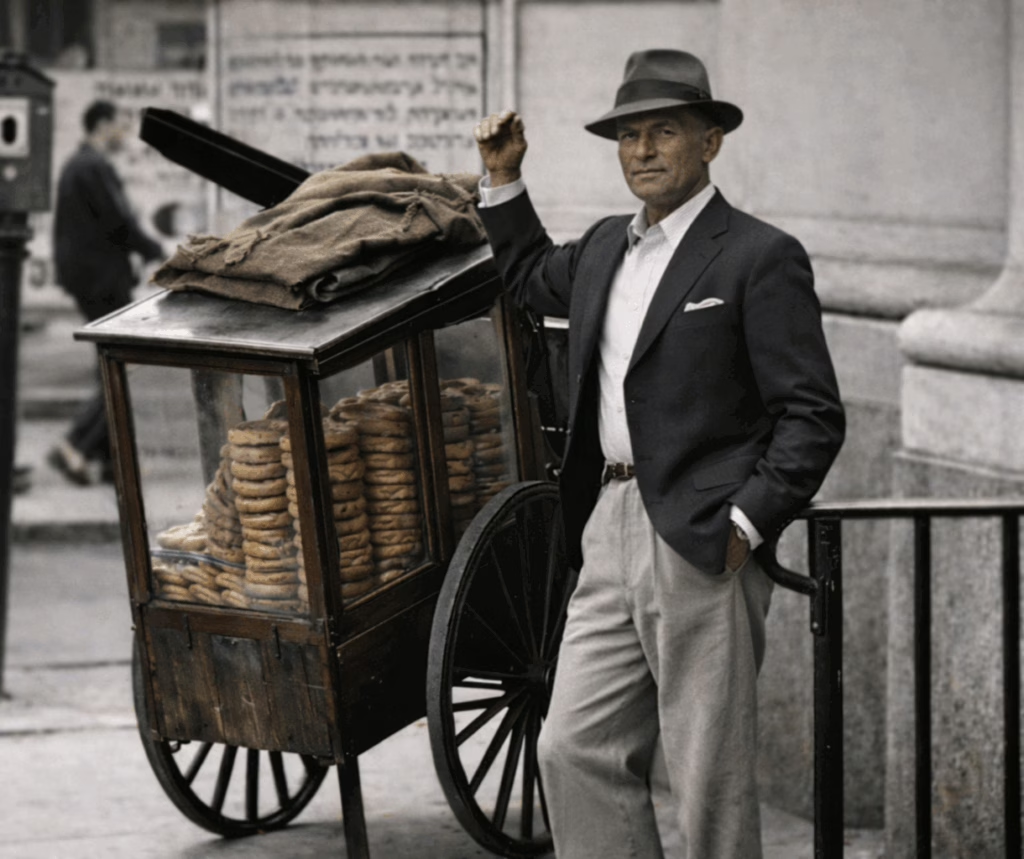
For generations of South Philly kids, Saturday mornings meant the pretzel man pushing his cart down narrow rowhouse streets, selling classic Philly-style soft pretzels — the traditional twisted, braided-loop shape Philadelphians grew up with, not pretzel sticks or knots. Large pretzels cost five cents, small pretzels were three for a nickel. If you wanted mustard, he flipped the pretzel upside down and brushed it onto the flat bottom so it stayed put. In schools, big brown shopping bags of pretzels were carried classroom to classroom, instantly waking up the room. Much of the city’s pretzel supply came from Federal Pretzel near 7th and Federal, where soft pretzels were part of everyday life.
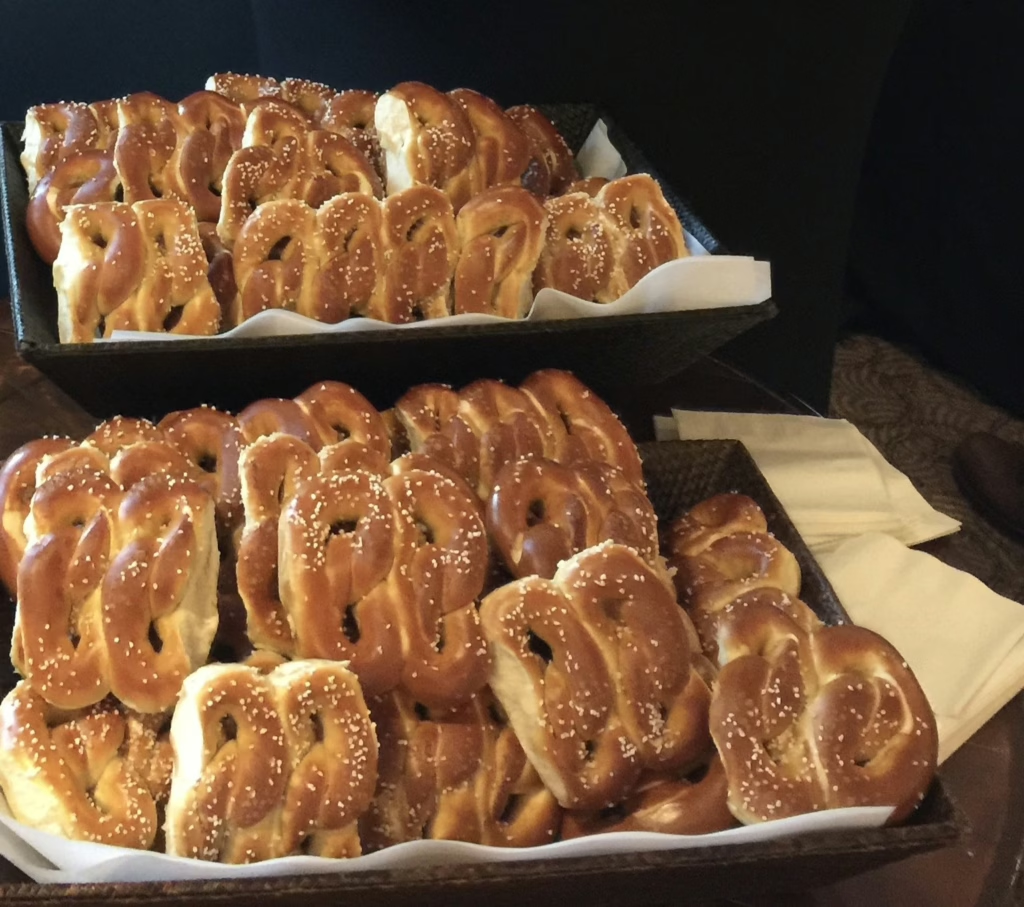
I began eating soft pretzels and ice cream only months into my time on this earth — and I still have the same love for both.
Federal Pretzel, now long gone, was an everyday part of my life growing up in South Philadelphia — except Sundays. Nothing was open on Sundays. In the 1960s, South Philly paused. Families stayed home. Not a corner store, not a bar, not even the butcher opened.
Only the bakeries — cakes and bread — and even they closed after the last Mass of the day.
Key Takeaways
- Federal Pretzel helped define the classic South Philly soft pretzel
- These were traditional Philly-style, twisted, braided-loop pretzels, not sticks or knots
- Saturday mornings revolved around the pretzel man’s cart
- Pretzel mustard was never yellow and never Guldin’s brown
- Mustard was brushed on the bottom of the pretzel so it stayed put
- When injuries happen on busy city streets, local experience matters
Saturday Mornings with the South Philly Pretzel Man
For many families, South Philly soft pretzels weren’t a treat — they were part of daily life.
In South Philly, you didn’t need a clock to know it was Saturday morning.
You listened for the pretzel man.
Every weekend, like clockwork, he came down the narrow streets with his pretzel cart, stacked high with racks of classic Philly-style soft pretzels — that familiar twisted, braided-loop shape. Warm. Chewy. Salted just right.
The prices were burned into memory:
- Large pretzels — five cents
- Small pretzels — three for a nickel
And if you asked for mustard, he did something that still sticks with you decades later.
He had a big plastic jug of mustard with what looked like a giant brush attached to the lid. He didn’t brush the top. He flipped the pretzels upside down and brushed the mustard onto the flat bottom — because the bottom was flat, and the top wasn’t. It stayed where it belonged. It didn’t drip. It made sense.
That wasn’t random. That was know-how.
Those pretzel carts were part of a much bigger Saturday morning routine in South Philadelphia.
If you sat on the front steps long enough, the neighborhood gradually came to life around you.
The pretzel man would make his rounds.
Delivery trucks dropped off bread to local stores.
Mothers swept their front steps and talked with neighbors across the street.
Kids were already organizing halfball games, football games, or whatever activity the day would bring.
Somewhere down the block, someone was carrying groceries home from the corner store. Others were running errands for their parents before disappearing for the rest of the day.
For many of us, a fresh pretzel was simply part of the experience. It wasn’t a destination. It was one piece of a typical South Philly Saturday morning.
The Pretzel Mustard — And Why Philly Knows the Difference
If you grew up with real Philadelphia pretzels, you learned this early:
Pretzel mustard was never yellow.
It wasn’t sweet.
And it definitely wasn’t Gulden’s brown.
Philadelphia pretzel mustard was its own thing — darker, sharper, with just enough bite to cut through the salt and dough without overpowering it. You didn’t ask for it by name. You just knew when it was right.
That mustard lived in plastic jugs, well-used squeeze bottles, or paper cups slid across a counter. No labels. No explanations. Just trust.
A few places still understand that balance today.
- The Pretzel Factory does an excellent job with their rendition
- Center City Pretzel keeps the old-school spirit alive
- Over in South Jersey, Mart Pretzels has been doing it right for generations
They all understand the same thing:
Pretzel mustard isn’t a condiment. It’s part of the experience.
Growing Up with Federal Pretzel in South Philly
South Philly neighborhoods have always been built around local routines
A lot of the city’s pretzels came from one place: Federal Pretzel, down around 7th and Federal.
The pretzels were unmistakable — traditional Philly-style soft pretzels with that twisted, braided-loop look, chewy inside, never doughy, never flashy. They weren’t a novelty. They were everyday food.
As kids, we’d walk up there and buy a box of 100 pretzels for three to five dollars. Not to eat. To sell. One by one, on the corner. That was early South Philly entrepreneurship — learning responsibility, math, and the block before anyone called it that. We also used to wash windows, paint addresses and carry groceries for people.
The School Recess Brown Bags
In grade school, pretzels didn’t arrive quietly.
They came in big brown shopping bags, carried classroom to classroom by two of the older kids; one collected the money, the other handed out the pretzels. The moment that bag hit the doorway, the room changed. Heads turned. Desks shifted. You could smell them before you saw them.
Nickel pretzels. No choices. No delays.
Those bags were part of school life — just as familiar as the bell.
Most of us probably ate Federal Pretzels almost every day without thinking much about it. They showed up at school, at candy stores, on pretzel carts, and in neighborhood shops. Looking back, it’s hard to imagine how many pretzels South Philly kids consumed in a typical week.
From Pretzel Carts to Today’s Streets
The food is still here — but the rhythm has changed.
Growing up in South Philly meant food traditions like cheese steaks and pizza, not just pretzels.
Food trucks. Delivery apps. Double-parked cars. Bikes and scooters squeezing through tight blocks. Kids stepping out between parked cars. Sidewalks cracked and uneven.
Back then, we didn’t think about safety. Looking back, it’s easy to see how many close calls there probably were.
Most days ended with nothing more than getting a little salt—or mustard—on your shirt.
Those same streets that made these moments possible are still part of daily life — just busier now.
A Quiet Word About Street Safety
Whether it’s the pretzel man’s cart or a modern food truck, some things never change:
- Slow down on small neighborhood streets
- Watch for kids stepping out between parked cars
- Be careful with hot food and uneven sidewalks
- Keep an eye on seniors and young children
When something goes wrong, the consequences can be serious.
When an Ordinary Day Turns Into Something Else
Most days in Philadelphia still end the way those Saturday pretzel mornings did.
But when a fall, crash, or injury changes everything, having someone who understands this city matters.
The Oakes Firm represents injured Philadelphians and their families across the city and surrounding communities.
The neighborhoods, traditions, and everyday experiences described in these memories helped shape generations of Philadelphians. While Philadelphia has changed over the years, the importance of community, friendship, and looking out for one another remains the same.
Many of the same streets where children chased the pretzel man, played halfball, and gathered on the front steps are still busy today—just with more traffic, more distractions, and different challenges.
To learn more about Philadelphia neighborhoods, local traffic patterns, and community safety issues across the city, visit our Philadelphia Neighborhood Safety Guide.
The Taste of Growing Up in South Philly
Soft pretzels weren’t the only food memories that shaped our childhoods.
Just as Federal Pretzel became part of everyday life, so did neighborhood institutions like Millie’s Ice Cream. A fresh pretzel on Saturday morning and an ice cream cone on a summer evening are memories shared by generations of South Philadelphia families.
If this story brought back memories, you’ll probably enjoy these next:
• Millie’s Ice Cream: A South Philadelphia Tradition
• America at 250: From South Philly to the Jersey Shore — Friendships That Lasted a Lifetime (link)
Read More Philadelphia Memories
The stories, traditions, neighborhood landmarks, and everyday experiences featured in this article are part of Philadelphia’s rich history. From corner stores and playgrounds to pretzel carts, ice cream parlors, parish schools, and summer nights on the block, these memories helped shape generations of Philadelphians.
Explore more South Philly stories, neighborhood traditions, Philadelphia history, and lifelong memories in our Philadelphia Nostalgia Hub, where you’ll find articles about neighborhood landmarks, local traditions, food memories, historic Philadelphia, and the people who made these communities specialat the Philadelphia Nostalgia Hub.
Frequently Asked Questions
What shape were traditional Philadelphia soft pretzels?
They were classic German-style soft pretzels, with a twisted, braided-loop shape — not pretzel sticks or thick knots.
What kind of mustard goes with a real Philadelphia pretzel?
Traditional Philadelphia pretzel mustard is darker and sharper than yellow mustard and distinct from classic brown mustards like Guldin’s.
Why did the pretzel man put mustard on the bottom of the pretzel?
The bottom of a soft pretzel is flat, which helps the mustard stay in place instead of sliding off the rounded top.
Where did South Philly soft pretzels come from?
Many traditional soft pretzels came from neighborhood bakeries like Federal Pretzel near 7th and Federal.