How Neighborhood Bars Shaped Friendship, Identity, and a Way of Life
South Philly bars in the 1960s and 1970s weren’t just places to drink.
They were neighborhood anchors — quietly divided by age, work schedules, and life stage — where friendships formed, reputations mattered, and bonds were forged that lasted a lifetime. In many ways, the bars helped turn friends into family.
🔑 Key Takeaways
- South Philadelphia bars were informally segmented by age and life stage
- Bars functioned as extensions of the neighborhood, not nightlife destinations
- Ten-cent beers and local breweries were part of everyday life
- Geography mattered — each bar served a specific corner, block, or group
- Friendships weren’t casual — they were like brotherhoods
- Five generations of the Oakes family have roots in this South Philly neighborhood
🟦 Editor’s Note
Editor’s Note
This piece is part of an ongoing effort to preserve South Philadelphia’s lived history — the routines, places, and unspoken rules that shaped neighborhood life. Five generations of the Oakes family have roots in this part of South Philly, and these stories are shared not as nostalgia, but as first-hand memory of how the neighborhood actually worked.
— Thomas G. Oakes
Bars on Every Other Block
If you grew up in South Philadelphia in the 1960s and 1970s, it felt like there was a bar on every other block. That wasn’t an exaggeration — it was simply how the neighborhood worked.
What outsiders never really understood was this:
not all bars were for everyone.
Different age groups gravitated to different places. And everyone knew where they belonged.
Ten-Cent Beers, Local Breweries, and Why It Tasted “Fresh”
One thing people today can barely believe is this: you could get a small glass of beer for ten cents. That’s not a statistic — that’s how I remember it. They were the seven-ounce beer glasses.
Philadelphia had a real beer culture then. Much of the beer came from local or regional breweries, so it didn’t have far to go. Beer felt fresh because it was fresh.
Some of the names everyone knew:
- Schmidt’s of Philadelphia — brewed locally, with major operations in Northern Liberties
- Ortlieb’s Brewery — a long-standing Philadelphia staple
- Esslinger Brewery — another familiar Philadelphia name
- Schlitz — brewed primarily in Milwaukee, but common in Philly bars
- Ballantine — founded in Newark, New Jersey, and closely tied to the region
Most bars didn’t carry dozens of options. You ordered what you always ordered — and it tasted the way you expected it to.
The Older Guys: Jardel’s (Now the Rosewood)
On Rosewood and Shunk Street, there was Jardel’s — now known as the Rosewood. In the 1970s, that bar was for the older guys.
They didn’t stay long. Most would run in, grab a quart of beer, and head back outside. In warmer months, they sat on the steps or leaned against the wall, listening to Phillies games on transistor radios.
No televisions. No noise. Just routine.
When I was really young, the guys who worked at the Navy Yard would line up outside the Rosewood. They’d walk in the front door, have a shot and a beer, walk out the back door, and head straight to work.
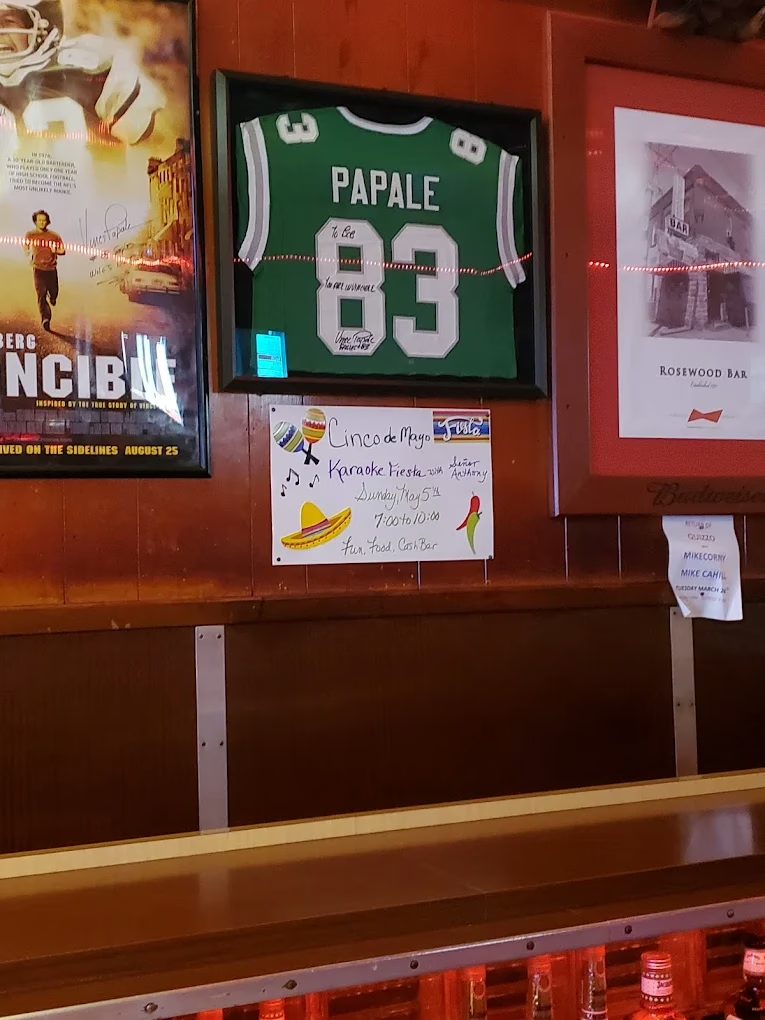
Invincible, the Rosewood, and the Neighborhood on Screen
Years later, it was surreal to see that same corner show up on the big screen. The old Jardel’s — now the Rosewood — was used as the bar location in Invincible, the film about Vince Papale, the Philadelphia Eagles walk-on who became a symbol of the city’s grit.
And here’s the part that still makes me smile: my father-in-law’s house was also in that moment. His home sat directly across the street from Jardel’s. For us, it wasn’t a “movie location.” It was just the neighborhood — until one day it was in a Disney film.
The Younger Crowd: The 1512 on Shunk Street
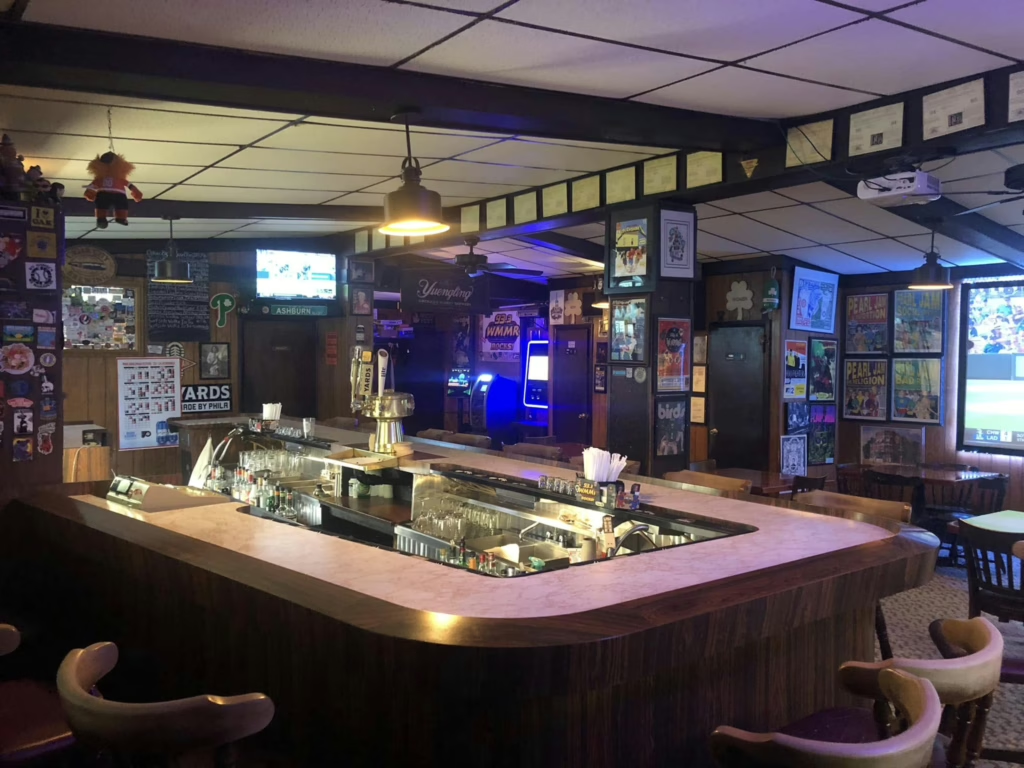
The 1512 Bar on Shunk Street was different. That’s where the younger crowd went — people in their 20s, 30s, maybe early 40s.
This was the social bar.
You played darts there.
You bet on games.
You talked, argued, laughed — and stayed.
My 21st birthday was at the 1512. My wife — we were only dating at the time — was there. That bar belonged to that stage of life: friendships forming, relationships beginning, everyone still figuring things out. Mike owned the bar. His son Mickey ran the bar in the evenings.
The Generation Above: McCusker’s at 17th and Shunk
Then there was McCusker’s, at 17th and Shunk. That’s where my dad and his brothers hung out.
My father had seven brothers and two sisters. Not all of his brothers were there at once, but you could usually find three or four of them at McCusker’s on any given day.
This was the 50-and-over crowd. Men who had already lived their lives, raised families, worked hard jobs, and settled into a rhythm.
You didn’t need to explain yourself there.
Everyone already knew who you were.
After-Hours Bars, Taprooms, and Neighborhood Geography
South Philly bar culture was layered — shaped by geography, work schedules, and unspoken boundaries.
Conner’s Club on Moyamensing Avenue was known as an after-hours bar. When most places closed, Conner’s stayed open — sometimes until 4 a.m.
Sharkey’s, at Broad and Porter, was the first bar on Broad Street coming up from the Navy Yard. When the shipyard workers poured out, Sharkey’s was jam-packed. Today, that corner is home to Scannicchio’s, but the energy of that location goes back decades.
On Packer Avenue, the Philadium was — and still is — a great local bar. It’s one of the few places that survived while keeping its neighborhood identity intact.
Just outside the Girard Estate, Nick’s Roast Beef wasn’t a bar, but it was part of the same ecosystem — a Philadelphia standard. The Girard Estate itself had no bars inside the neighborhood, but bars lined the perimeter. Everyone knew where the lines were.
And this is only a small sample. There were countless taprooms and gathering spots — Barrels, Brothers II, the VFW, and many more.
Brotherhood, Not Just Friendship
In South Philly, friendships weren’t casual. They were like brothers.
I still spend time with the same crew I grew up with — almost 70 years. We weren’t just friends. We were brothers from other mothers. That’s what those bars helped hold together: relationships that lasted a lifetime.
Nicknames: The Way South Philly Really Worked
Another South Philly thing: almost nobody went by their birth name.
I was T — sometimes T-Pot.
Frankie Avalon — a cousin of the Frankie Avalon — was Av.
Joey was Fogs, because he never cleaned his eyeglasses.
Those are just a few. In our world, nicknames were the real names. You heard one shouted from half a block away, and you already knew who was coming around the corner.
Strength, Reputation, and the Unspoken Rules
One story captures South Philly bar culture better than any explanation.
My grandfather — my father’s father — was strong. Not gym strong. Working strong.
One night, in a bar on the northwest corner of Hicks and Shunk, someone bet him a beer that he couldn’t lift the old cigarette machine.
He picked it up, walked it outside, and set it on the pavement.
It took three guys to bring it back inside.
A bet was a bet.
Once it was settled, everyone moved on.
More Than Bars
These places weren’t just somewhere to drink. They were anchors.
They reflected:
- your age
- your stage of life
- who you spent time with
- who already knew your story
You didn’t choose a bar randomly. You ended up where you belonged.
Looking Back
Neighborhoods change. Bars close. New places open.
But that sense of belonging — of knowing exactly where you fit — feels like something from another time.
When I think about South Philly in the 1970s, I don’t just remember the bars. I remember transistor radios, summer air, darts hitting a board, and friendships that became brotherhood.
That was South Philly.
And it’s worth remembering.
This story is part of an ongoing South Philadelphia memories series.
More reflections on neighborhood life, traditions, and growing up in South Philly are coming soon.
The neighborhoods we grew up in are still home to busy streets, sidewalks, transit stops, and public spaces — and injuries still happen there every day.
When something goes wrong, knowing where to turn can make all the difference.
Five generations of the Oakes family have our roots in Philadelphia.
We’re with you every step of the way.
Get Connected with The Oakes FirmPrefer to call? (215) 883-4412
Your First Call for Injury Law
Read More Philadelphia Memories
The stories, traditions, neighborhood landmarks, and everyday experiences featured in this article are part of Philadelphia’s rich history. From corner stores and playgrounds to pretzel carts, ice cream parlors, parish schools, and summer nights on the block, these memories helped shape generations of Philadelphians.
Explore more South Philly stories, neighborhood traditions, and Philadelphia memories at the Philadelphia Nostalgia Hub.
Frequently Answered Questions
Were there really that many bars in South Philly?
Yes. In the mid-20th century, South Philadelphia neighborhoods often had a bar on nearly every block.
Did different age groups really go to different bars?
Yes. Bars were informally divided by age and stage of life.
Were small beers really ten cents?
That’s how I remember it — a small glass of beer for a dime.
Why did beer taste fresher back then?
Much of it came from local or regional breweries and didn’t have far to travel.
Was Jardel’s (now the Rosewood) really in the movie Invincible?
Yes. The Rosewood (formerly Jardel’s) was used as the bar location in Invincible, the film about Philadelphia Eagles walk-on Vince Papale.