Answer (What families should know)
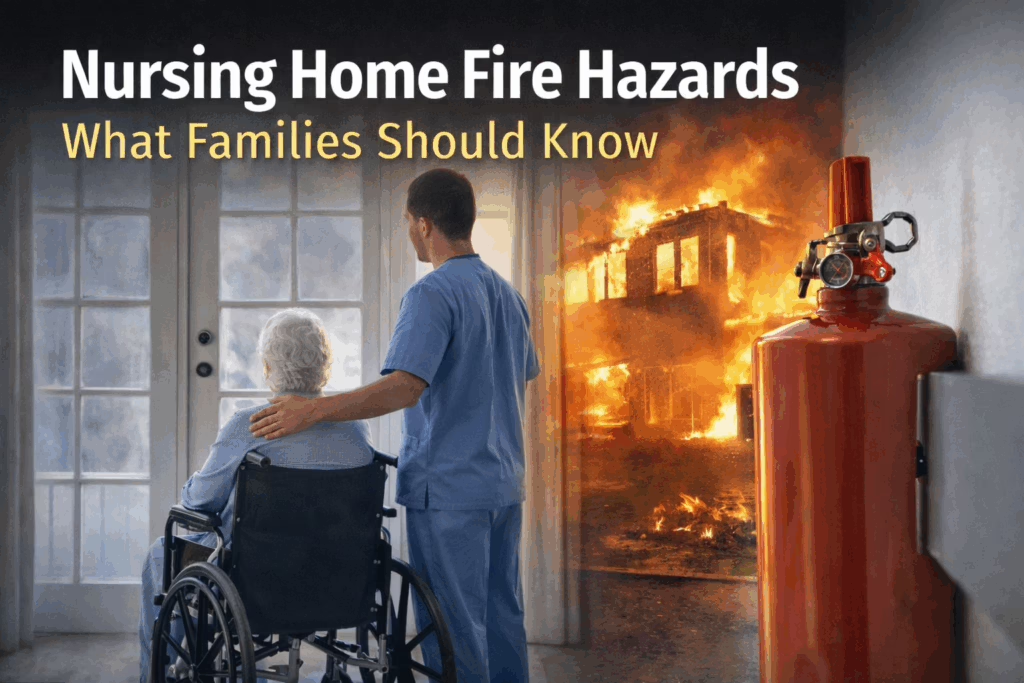
Nursing home fire hazards can turn a routine day into an emergency in seconds—especially when residents have limited mobility, rely on oxygen, or need staff assistance to evacuate. This guide explains the most common fire risks in long-term care settings, the safety systems that should be in place, and the practical questions families can ask about drills, maintenance, and emergency plans.
When my mother was young, she lived on a small street in South Philadelphia with her two sisters and two brothers. One night, a fire broke out in their home while everyone slept. She was only five years old at the time, and she later told me she was told it was an electrical fire inside the walls. Thankfully, the family got out in time — but they didn’t have much, and what little they had was lost. My mother lived to be 90, and she never forgot that night. It stayed with her throughout her life, and it made fire safety something she worried about in our home, too.
That perspective is why this guide focuses on the hazards families can ask about — and the safety systems that must work before an emergency turns into a tragedy.
Why Nursing Home Fires Are Especially Dangerous
Unlike private residences, nursing homes concentrate large numbers of medically vulnerable individuals in a single structure. Fires in these settings are more dangerous because:
- Residents may be unable to self-evacuate
- Staff must assist multiple residents simultaneously
- Smoke can spread quickly through shared corridors
- Evacuation requires coordination, equipment, and training
Common Fire Hazards in Nursing Homes
While every facility is different, these hazards appear frequently in safety discussions and investigations:
- Aging electrical systems, overloaded outlets, or faulty wiring
- Kitchen equipment, cooking surfaces, and grease-related risks
- Laundry facilities and lint buildup
- Oxygen use near ignition sources
- Gas lines, heating systems, and utility infrastructure
- Delayed response to smoke alarms or reports of gas odors
Related reading: Bristol Nursing Home Fire: What This Tragedy Reveals
Required Fire Safety Systems
Most nursing homes are expected to maintain core life-safety systems designed to detect fire early and slow its spread, including:
- Fire alarms and smoke detectors
- Sprinkler systems (where required or installed)
- Fire-resistant construction materials
- Clearly marked evacuation routes
- Emergency lighting and backup power
Failures in any of these systems can dramatically worsen outcomes — especially when residents require assistance to move.
Inspections, Oversight, and Emergency Planning
Facilities are inspected by state and federal agencies, but inspections alone do not guarantee real-world readiness. Families can ask practical questions about:
- How often fire drills occur (and whether they occur on different shifts)
- How evacuation plans are implemented for residents with limited mobility
- Whether staff receive emergency-response training and refreshers
- How maintenance issues are reported, tracked, and resolved
- How the facility responds to smoke or gas-odor reports
Related guide: nursing home and hospital fall injuries in Philadelphia
Questions Families Can Ask at a Tour or Care-Plan Meeting
- Fire drills: “How many fire drills do you conduct each year, and are they done on nights/weekends too?”
- Evacuation roles: “Who leads evacuations and who assists non-ambulatory residents?”
- Oxygen safety: “How is oxygen handled safely, and what is the policy on ignition sources?”
- Hazard escalation: “How do you document and escalate reports of smoke or gas odors?”
- System testing: “When was your last safety systems test (alarms/sprinklers/emergency power)?”
When Fires Lead to Investigations or Lawsuits
After serious nursing home fires, investigations may involve fire marshals, utility regulators, and safety agencies. In some cases, injured residents or families pursue civil claims related to safety failures or response decisions. (This is general information, not legal advice.)
For factual context surrounding the recent Bristol incident, see our related reporting on PhillyLegalNews: Bristol Nursing Home Fire: What This Tragedy Reveals .
Key Takeaways
- Nursing home fires pose heightened risks because many residents cannot self-evacuate.
- Early warning signs (smoke, alarm issues, gas odors) should never be ignored.
- Safety systems only help when they are tested, maintained, and paired with trained staff.
- Families can protect loved ones by asking direct questions about drills, staffing, and maintenance.
When something goes wrong, knowing where to turn can make all the difference.
Five generations of the Oakes family have our roots in Philadelphia.
We’re with you every step of the way.
Get Connected with The Oakes FirmPrefer to call? (215) 883-4412
Your First Call for Injury Law