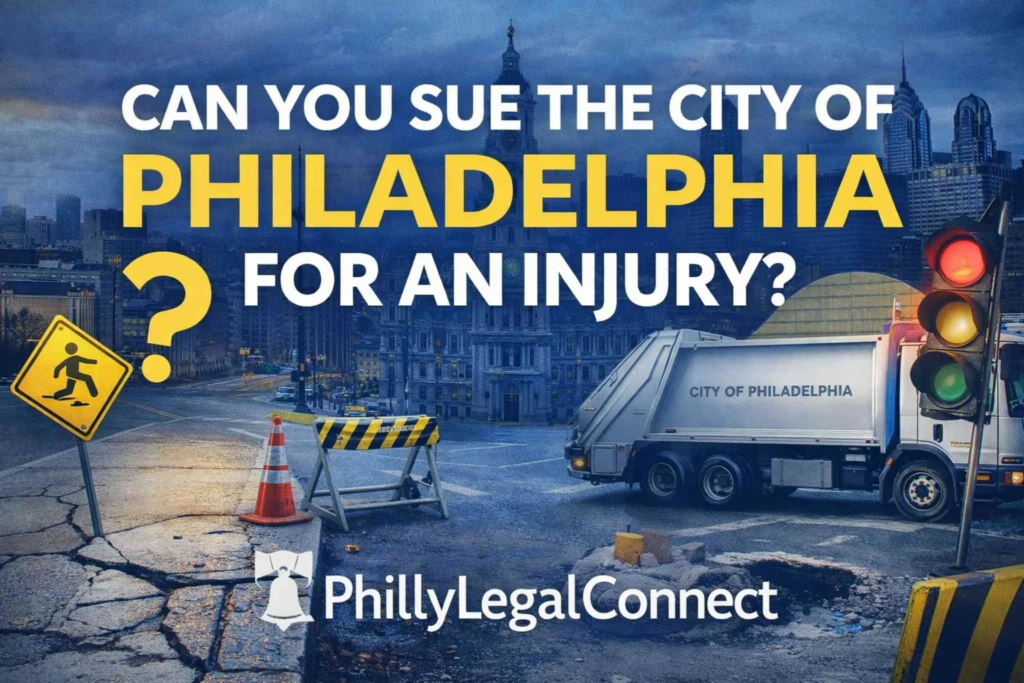
Can You Sue the City of Philadelphia for an Injury?
Yes—sometimes. Pennsylvania law generally protects the City of Philadelphia through governmental immunity, but several legal exceptions may allow an injured person to pursue a claim.
Common examples include dangerous sidewalks, roadway defects, hazardous City-owned property, and accidents involving City vehicles. These cases often depend on whether the City knew—or should have known—about the dangerous condition and had enough time to correct it.
✅ Key Takeaways
- The City of Philadelphia is usually immune from injury lawsuits unless a legal exception applies.
- Common exceptions involve streets, sidewalks, City property defects, and City vehicles.
- Many City cases turn on notice—whether the hazard existed long enough to be fixed.
- Traffic design decisions and recurring hazards can be legally significant.
- Early documentation (photos, location data, 311 history) can be critical.
- You can sue the City of Philadelphia only in limited situations where legal immunity does not apply.
- City injury cases usually turn on notice, location, and whether the hazard was foreseeable.
When Can You Sue the City of Philadelphia?
Under Pennsylvania’s Political Subdivision Tort Claims Act, the City is generally protected from injury lawsuits. However, immunity does not apply in every case.
A claim may exist if your injury falls within a recognized exception and you can show:
- a dangerous condition existed,
- it caused your injury, and
- the City had notice and time to correct it.
Common Situations Where City Liability May Arise
Streets, Sidewalks, and Curb Cuts
Claims often involve:
- broken or uneven sidewalks
- potholes and roadway defects
- missing or loose utility covers
- dangerous curb cuts or crosswalk transitions
- recurring ice or drainage problems
The legal focus is usually how long the condition existed and whether the City knew—or should have known—about it.
City-Owned Property
If you are injured on City-owned or City-controlled property, liability may depend on:
- who controlled maintenance at the time
- whether the defect was foreseeable
- whether the condition was preventable
City Vehicles
Injuries involving City vehicles—such as sanitation trucks or other municipal vehicles—may qualify under a separate exception if the employee was acting within the scope of employment.
Philadelphia Traffic Design, Traps, and Foreseeable Hazards
Some injuries are tied not just to maintenance failures, but to traffic design choices and recurring conditions that create predictable risk.
South Philadelphia corridor changes
In South Philadelphia, particularly along Broad Street and Washington Avenue, turning lanes and traffic controls have changed repeatedly. Temporary features like yellow bollards have been installed and later removed, while painted lane markings and turn-only rules remain.
On a heavily traveled corridor like Washington Avenue—serving large retail destinations, long-standing warehouses, and increasing residential construction—confusing or inconsistent controls can lead to:
- sudden stops
- improper turns
- pedestrian conflicts
Tight turning areas and high-traffic zones
At intersections such as Broad Street and Wolf Street, turning areas can be extremely short in high-volume traffic and hospital corridors. When turning space does not match real traffic flow, drivers may block crosswalks or make abrupt movements that increase crash risk.
Blocked sightlines at intersections
At Grays Ferry Avenue and Catharine Street, vehicles such as trucks or vans frequently park in a way that blocks sightlines for drivers entering Grays Ferry Avenue. This intersection sits across from Naval Square, an area with steady pedestrian and commuter traffic.
Blocked visibility at an intersection is a foreseeable hazard that can often be corrected through:
- parking restrictions near corners
- improved traffic controls
- signalization
Underpasses, signals, and public-space hazards
Other recurring City-related risks include:
- underpasses that develop icy conditions due to poor drainage
- traffic signals that are out or malfunctioning
- falling debris near public walkways
- hazards in commuter access areas
When these conditions repeat, they raise questions about notice and reasonable corrective action.
Why Location-Specific Details Matter
City liability cases often hinge on patterns, not isolated events. Repeated complaints, prior repairs, or known problem areas can support the argument that a hazard was foreseeable and preventable.
What to Do After a City-Related Injury (Checklist)
Document immediately:
- photos and video (wide + close-up)
- exact location (intersection, address, landmarks)
- weather and lighting conditions
- witness names and contact information
Preserve evidence:
- 311 complaint history
- maintenance or repair records
- medical records and work restrictions
Early documentation can make the difference in cases involving City responsibility.
When It’s Worth Speaking With a Lawyer
A quick legal review is often worthwhile if:
- the injury occurred on a street, sidewalk, or City-controlled property
- the condition appears longstanding
- there were prior complaints or visible wear
- you missed work or required significant medical care
If you’re unsure whether the City of Philadelphia can be held responsible—or which entity controls the area where you were injured—The Oakes Firm can help identify the right path and preserve evidence early.
Explore More Philadelphia Injury Resources
Whether you’re researching accident prevention, neighborhood safety concerns, or what to do after an injury, PhillyLegalConnect offers a growing collection of guides designed to help Philadelphia residents, commuters, visitors, and families stay informed.
- The Philadelphia Injury Playbook — Step-by-step guidance on what to do after an accident, protecting your rights, documenting injuries, and understanding the claims process.
- Philadelphia Neighborhood Safety Hub — Explore neighborhood-specific traffic concerns, dangerous intersections, pedestrian safety issues, and local accident trends throughout Philadelphia.
- Jersey Shore Personal Injury Guide — Safety information and injury resources covering the Jersey Shore, including Wildwood, Ocean City, Avalon, Sea Isle City, Cape May, and surrounding shore communities.
These cornerstone guides are continually updated with new articles, safety resources, local information, and educational content to help individuals and families make informed decisions after an accident or injury.
When something goes wrong, knowing where to turn can make all the difference.
Five generations of the Oakes family have our roots in Philadelphia.
We’re with you every step of the way.
Get Connected with The Oakes FirmPrefer to call? (215) 883-4412
Related Philadelphia Safety Articles
- Philadelphia’s Most Dangerous Intersections
- Broad & Oregon South Philly: How Transit, Schools & Traffic Changed a Neighborhood Crossroads
- Philadelphia Neighborhood Safety Hub
- The Philadelphia Injury Playbook
❓FAQs
Can I sue the City of Philadelphia for a sidewalk injury?
Sometimes. It depends on the type of defect, how long it existed, and whether the City had notice and time to fix it.
Is SEPTA the same as the City of Philadelphia?
No. SEPTA is generally a separate public authority, and different notice and immunity rules may apply.
Do I have to file a 311 complaint before suing?
Not always. But a prior 311 report (or other documented complaints) can help prove notice.
What if the traffic signal wasn’t working?
A signal outage can be legally significant, especially if it existed long enough that the responsible agency should have addressed it.
How long do I have to file a claim?
Many Pennsylvania injury claims have a two-year deadline, but government-related cases can involve additional requirements and shorter notice rules in some situations.
Explore More Philadelphia Injury Resources
Whether you’re researching accident prevention, neighborhood safety concerns, or what to do after an injury, PhillyLegalConnect offers a growing collection of guides designed to help Philadelphia residents, commuters, visitors, and families stay informed.
- The Philadelphia Injury Playbook — Step-by-step guidance on what to do after an accident, protecting your rights, documenting injuries, and understanding the claims process.
- Philadelphia Neighborhood Safety Hub — Explore neighborhood-specific traffic concerns, dangerous intersections, pedestrian safety issues, and local accident trends throughout Philadelphia.
- Jersey Shore Personal Injury Guide — Safety information and injury resources covering the Jersey Shore, including Wildwood, Ocean City, Avalon, Sea Isle City, Cape May, and surrounding shore communities.
These cornerstone guides are continually updated with new articles, safety resources, local information, and educational content to help individuals and families make informed decisions after an accident or injury.