Quick Answer
Old City Philadelphia presents unique accident risks due to cobblestone streets, heavy tourism, historic infrastructure, and high pedestrian activity. Slip-and-fall incidents, pedestrian accidents, and traffic congestion near Independence Mall, Penn’s Landing, and surrounding streets increase the likelihood of injury—especially during peak travel seasons.
Old City Philadelphia is one of the most historic and heavily visited areas in the country. From Independence Hall to the Liberty Bell, cobblestone streets and centuries-old buildings define the neighborhood.
But with that history comes risk. Uneven sidewalks, dense pedestrian traffic, rideshare congestion, and narrow streets create conditions where accidents can happen quickly—especially for visitors unfamiliar with the area. This includes high-traffic areas such as Independence Mall, Market Street, Chestnut Street, and the Penn’s Landing waterfront.
For a broader breakdown of accident risks across the city, see our Philadelphia Neighborhood Safety Guide.
Key Takeaways
Seasonal activity matters: Accidents increase during peak travel months
Historic infrastructure creates hazards: Cobblestone streets and uneven sidewalks increase fall risks
Tourism drives congestion: High pedestrian volume raises accident exposure
Mixed traffic increases danger: Cars, bikes, rideshare, and pedestrians share tight spaces
Waterfront and highway access add risk: I-95 and bridge traffic create complex conditions
Old City Philadelphia accidents can involve pedestrians, cyclists, and drivers navigating these historic and high-traffic environments.
Cobblestone Streets and Sidewalk Hazards
Old City’s original cobblestone streets and historic walkways are part of its charm—but they also present real safety concerns. These types of hazards are also common in other historic areas of the city, as explained in our Philadelphia Neighborhood Safety Guide.
Many surfaces are:
- Uneven
- Slippery when wet
- Worn from age
Slip-and-fall accidents are common in areas such as:
- Elfreth’s Alley
- Front Street near the waterfront
- Historic courtyards and church properties
Visitors wearing dress shoes or unfamiliar with the terrain are especially at risk.
Independence Mall and Tourist Congestion Risks
Areas surrounding Independence Mall see some of the highest pedestrian traffic in the city.
Key risk factors include:
- Large crowds and group tours
- Tour buses and rideshare traffic
- Pedestrians stepping into streets for photos
- Congested crosswalks along Arch, Market, and 6th Streets
These conditions increase the likelihood of pedestrian–vehicle accidents.
Historic Landmarks and Visitor Safety Risks
Several major landmarks bring both heavy foot traffic and unique safety challenges:
- Liberty Bell Center — long lines, crowd congestion, wet entryways
- National Constitution Center — large group movement and busy crossings
- Independence Hall — narrow staircases and worn surfaces
Even modern spaces become hazardous due to volume and movement patterns.
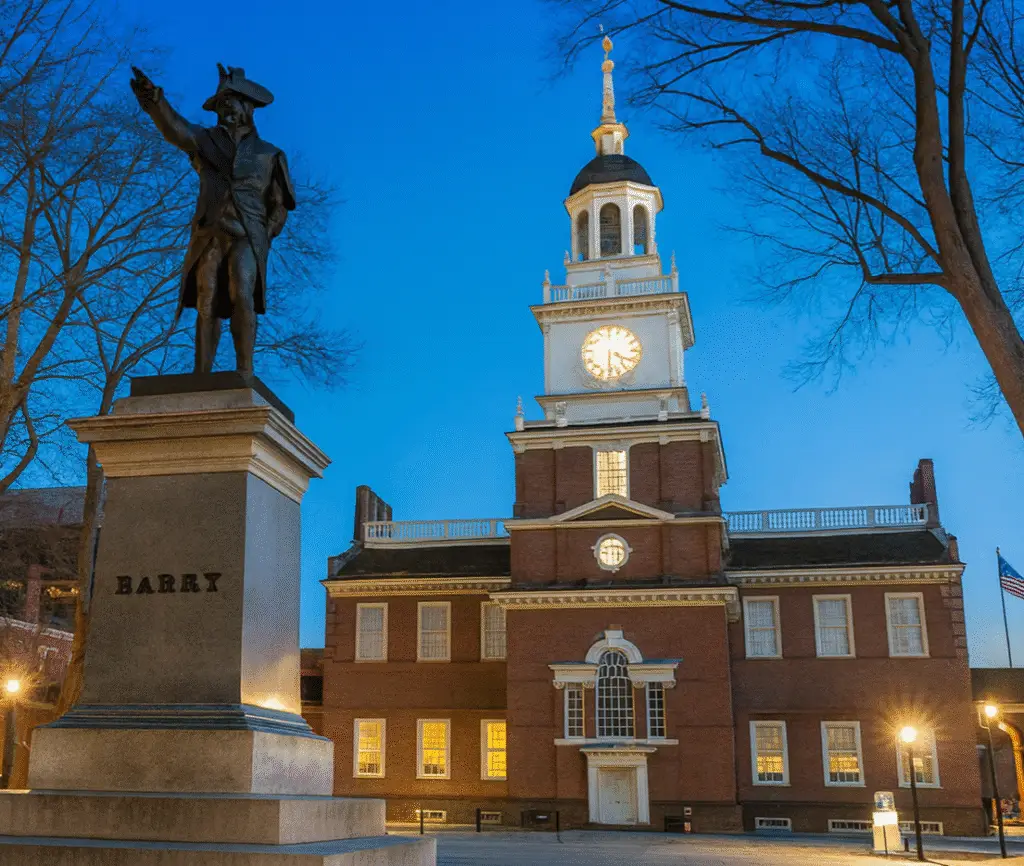
Independence Hall is where the Declaration of Independence and the U.S. Constitution were signed. Tours here involve navigating narrow staircases, worn wooden floors, and stone steps—all of which can pose slip or trip hazards, especially for visitors distracted by the historic surroundings.
Penn’s Landing and Waterfront Safety Risks
Penn’s Landing extends Old City’s risk profile toward the Delaware River.
Hazards include:
- Festival crowds and event congestion
- Mixed pedestrian, bike, and scooter traffic
- Uneven dock surfaces
- Parking and drop-off zone conflicts
Access routes crossing I-95 (Market, Chestnut, Race Streets) also increase pedestrian exposure.
This article is part of our Philadelphia Neighborhood Safety Guide, which explores accident risks across the city.
Cyclist and Motorcycle Risks in Old City
Old City serves as a major connector between:
- Center City
- I-95
- Ben Franklin Bridge
- This creates challenges for cyclists and motorcyclists:
- Cobblestones reduce traction
- Narrow lanes limit maneuverability
- Blind intersections from historic buildings
- Pedestrians stepping into bike paths
- Motorcyclists are especially vulnerable in congested areas.
Traffic Flow and Highway Access Hazards
Old City is directly connected to major highways:
- I-95 via Columbus Boulevard
- I-676 (Vine Street Expressway)
- Ben Franklin Bridge access
These connections create:
- Sudden congestion
- Aggressive merging
- Increased pedestrian risk near intersections
Traffic backups often lead to unsafe driving behaviors and crossing risks.
Year-Round Safety Risks in Old City
Each season brings different hazards:
- Spring: School trips and tour groups
- Summer: Peak tourism and congestion
- Fall: Festivals and street events
- Winter: Ice and slippery historic surfaces
Old City is active year-round, meaning risk is constant.
What To Do After an Accident in Old City Philadelphia
If you are injured:
- Seek medical attention immediately
- Document the scene and gather witness information
- Report the incident to property owners or authorities
- Understand your legal options early
For step-by-step guidance, visit our Philadelphia Injury Playbook.
How Old City Fits Into Philadelphia’s Safety Patterns
Old City reflects a broader pattern seen across Philadelphia—dense pedestrian environments, historic infrastructure, and mixed-use traffic.
For a full citywide breakdown, visit our Philadelphia Neighborhood Safety Guide.
Frequently Asked Questions
Why are accidents common in Old City Philadelphia?
Historic streets, heavy tourism, and mixed traffic patterns increase risk.
Are slip-and-fall accidents common in Old City?
Yes. Cobblestones, uneven sidewalks, and weather conditions contribute to frequent falls.
Is Penn’s Landing a high-risk area?
It can be. Crowds, events, and waterfront conditions increase accident exposure.
Do pedestrians face higher risks in Old City?
Yes. High foot traffic combined with vehicle congestion creates elevated risk.
What should I do after an accident in Old City?
Seek medical care, document the incident, and understand your legal options as soon as possible.
📍 Related Guides You May Find Helpful:
- Rittenhouse Square – A Philadelphia Treasure Full of Life—and Risk
- Fairmount Park Accidents: What to Do After an Injury in Philadelphia’s Largest Urban Park
- Penn’s Landing – Why Penn’s Landing Can Be Risky
- Philadelphia Art Museum (Rocky Steps) Slip & Fall Guide