By Thomas G. Oakes
Answer Block
What can trial lawyers learn from an international engineering deposition?
Key Takeaways
- Preparation begins long before testimony starts.
- Great trial lawyers prepare the process — not just the witness.
- Clear communication is essential in international depositions.
- Technology is most valuable when it supports thoughtful preparation.
- Protecting the accuracy of the record benefits everyone involved.
Every Great Deposition Begins Before the First Question
Every deposition presents unique challenges, but some teach lessons that remain valuable for decades.
Years ago, I participated in an international engineering deposition involving a Japanese corporate witness, two interpreters, and one of Philadelphia’s outstanding trial lawyers. Although the matter involved complex products liability litigation, the lessons extend well beyond a single practice area.
What impressed me most was not the technology itself. It was the extraordinary preparation that surrounded every aspect of the proceeding.
That experience reinforced a lesson I have carried with me throughout my career:
Successful litigation begins long before testimony is ever taken.
Preparation is far more than reviewing documents, organizing exhibits, or outlining questions. Exceptional trial lawyers also anticipate communication challenges, understand the needs of the witness, and establish procedures that allow everyone involved to focus on providing accurate testimony.
Those same principles apply whether a lawyer is preparing a serious car accident case, a truck accident case, a construction accident claim, or a complex product liability matter.
Preparation Is a Competitive Advantage
The most effective litigators rarely leave important details to chance.
Whether preparing for a deposition involving engineers, physicians, accident reconstruction experts, economists, interpreters, or multiple corporate representatives, successful attorneys understand that anticipating potential issues before they arise often makes the difference between an ordinary deposition and an exceptional one.
Preparation includes:
- Understanding the witness
- Organizing documents and exhibits
- Planning for communication challenges
- Coordinating interpreters when necessary
- Testing technology before proceedings begin
- Developing procedures that reduce misunderstandings
When these elements come together, communication improves, testimony becomes more efficient, and the permanent record is better protected.
These same organizational principles are discussed throughout the Philadelphia Injury Playbook, which helps readers understand how preparation, documentation, and informed decision-making can affect injury claims.
Technology Should Support Preparation — Not Replace It
Today’s litigation teams have access to sophisticated courtroom presentation software, digital exhibit management, remote depositions, AI-assisted transcription, cloud-based collaboration platforms, and advanced trial presentation systems such as TrialDirector.
These innovations have transformed modern litigation.
Yet the most valuable lesson from that international engineering deposition remains remarkably simple:
Technology should strengthen preparation — not replace it.
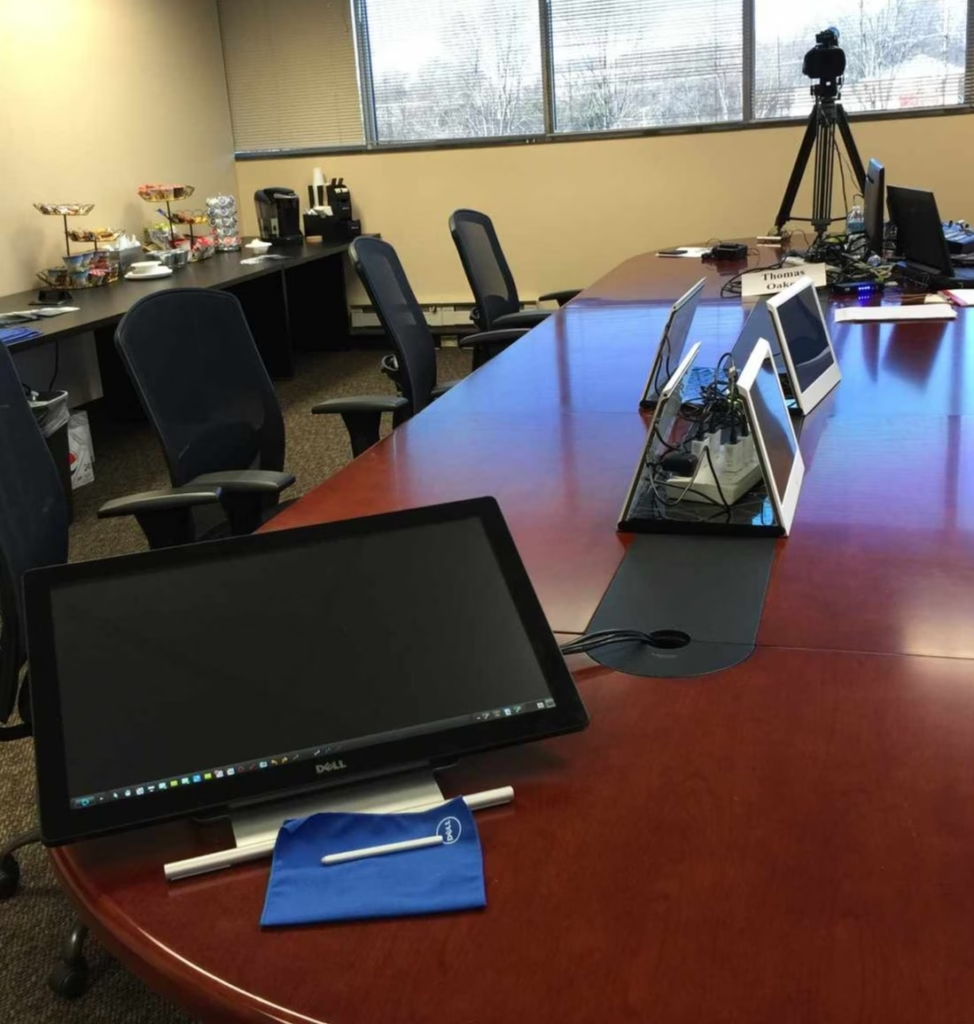
Realtime court reporting provided another layer of communication by allowing participants to follow testimony as it was being created. When used thoughtfully, technology improved understanding, increased efficiency, and helped preserve the integrity of the record.
The technology itself was impressive.
The preparation behind it was even more impressive.
Why This Lesson Still Matters Today
Technology has advanced dramatically over the past three decades.
Organizations such as the National Court Reporters Association, educational institutions including Temple University Beasley School of Law, and professional organizations such as the Federation of Defense & Corporate Counsel continue to demonstrate how technology, education, and professional preparation can improve advocacy while preserving the integrity of the legal process.
But technology alone never wins cases.
Great lawyers continue to:
- Prepare thoroughly.
- Communicate clearly.
- Anticipate challenges.
- Protect the integrity of the record.
- Use technology to support — not replace — professional judgment.
Those principles benefit clients, witnesses, experts, courts, and ultimately the pursuit of justice.
Editor’s Note — Thomas G. Oakes
Throughout more than four decades working alongside trial lawyers, judges, court reporters, litigation support professionals, and legal educators, I have learned that some of the most valuable lessons occur long before testimony begins.
Although the deposition discussed here involved an international engineering expert and complex products liability litigation, its underlying lesson applies to virtually every area of litigation. Whether handling a serious brain injury case, a wrongful death claim, a public transportation accident, or a routine automobile collision, thoughtful preparation remains one of the greatest competitive advantages any attorney can possess.
Technology will continue to evolve.
Preparation never goes out of style.
Continue Reading on Philadelphia Legal News
This article summarizes one of the most memorable professional experiences of my career.
The complete feature tells the full story of how Edward A. Gray, Esquire, early realtime court reporting, two interpreters, and meticulous preparation combined to protect the integrity of an international engineering deposition.
Read the complete feature:
Learn More About The Oakes Firm
If you or someone you love has been injured because of another person’s negligence, understanding your legal rights is the first step toward protecting your future.
- Car Accidents
- Truck Accidents
- Construction Accidents
- SEPTA & Public Transportation Accidents
- Products Liability
- Brain Injuries
- Wrongful Death
Visit The Oakes Firm to learn more about your legal rights and options.
Continue Learning in the Philadelphia Injury Playbook
This article highlights how careful preparation, clear communication, and protecting important evidence can influence the outcome of a legal matter. Those same principles apply after many types of accidents and injuries.
For a broader understanding of what to do after an accident—including preserving evidence, documenting injuries, dealing with insurance companies, identifying responsible parties, and avoiding common mistakes—visit our cornerstone guide:
The Philadelphia Injury Playbook
The Playbook brings together many of the educational resources found throughout Philadelphia Legal Connect, including neighborhood safety guides, transportation accidents, premises liability, medical malpractice, construction injuries, product liability, and seasonal safety information for Philadelphia, South Jersey, and the Jersey Shore.
Related Philadelphia Injury Playbook Resources
- Philadelphia Neighborhood Safety Hub
- Daycare Safety in Philadelphia
- Hospital & Nursing Home Fall Injuries
- SEPTA Accident Guide
Frequently Asked Questions
Why is preparation so important before a deposition?
Preparation allows attorneys to anticipate communication challenges, organize evidence, coordinate witnesses and experts, and improve the overall accuracy and efficiency of testimony.
What is realtime court reporting?
Realtime court reporting converts a court reporter’s stenographic writing into nearly instantaneous text that appears on computer screens during depositions and court proceedings, allowing participants to follow testimony as it occurs.
Why are interpreters sometimes used during depositions?
Interpreters help ensure that witnesses who are more comfortable speaking another language fully understand each question and accurately communicate their testimony, particularly when technical or specialized terminology is involved.
How has technology changed modern litigation?
Technology has improved communication, document management, evidence presentation, remote collaboration, and courtroom efficiency. However, experienced trial lawyers continue to recognize that technology is most effective when combined with careful preparation and sound legal judgment.
Disclaimer: This article is intended for educational and informational purposes only and does not constitute legal advice. Reading this article does not create an attorney-client relationship. Every legal matter is unique. If you need legal advice regarding a specific situation, consult a qualified attorney licensed in the appropriate jurisdiction.