Answer Block
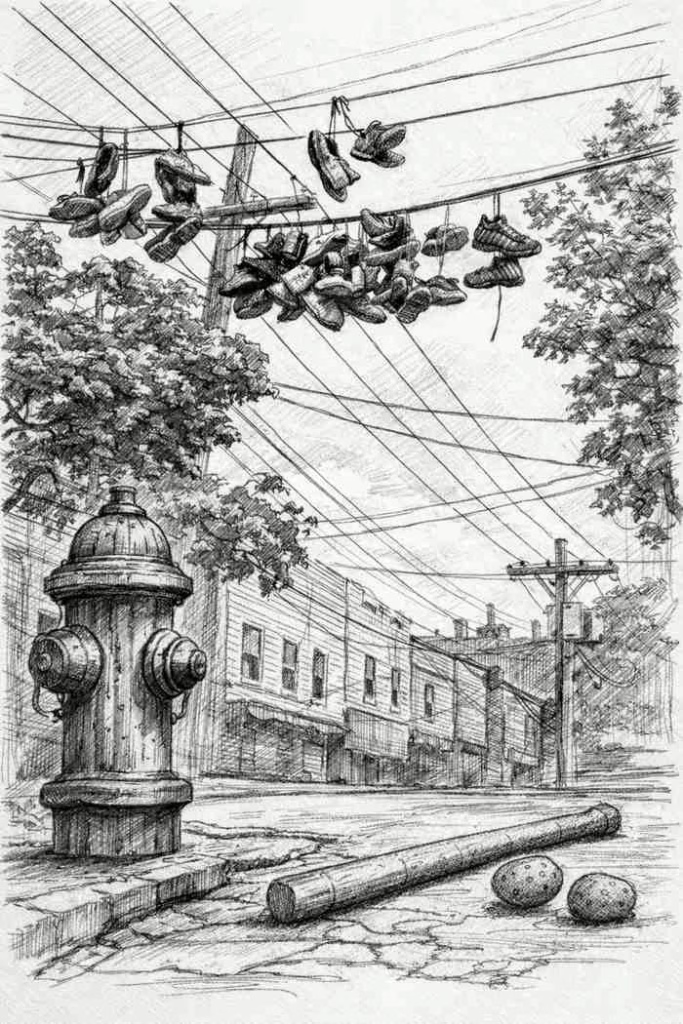
Growing up in South Philadelphia in the 1960s and 1970s meant street summers — homemade fireplug wrenches, half-ball games with broomstick bats and pimple balls cut in half, water ice from Pop’s on Oregon Avenue, pretzels from the cart, and worn-out Converse sneakers slung over telephone wires. There’s something unique about growing up in South Philly that shaped the way we experienced community and childhood. Blocks were filled with kids. Streets were playgrounds. And everyone knew everyone.
Key Takeaways
- South Philly summers centered around fireplugs, half-ball, fastball, and box ball
- Homemade fireplug wrenches — no sprayers, just raw hydrant pressure
- Kids crouched behind the hydrant and made their own spray by pushing against the water force
- Parents feared broken glass and injuries more than anything else
- Half-ball used broomstick bats and pimple balls cut in half — and roofed balls were a daily problem
- Dougherty’s Garage ramp and roof runs became the neighborhood’s way of restocking halfballs
- Barry Playground (DV / Johnson’s Field) shaped neighborhood athletes and leagues
- Pop’s Water Ice on Oregon Ave sold only cherry or lemon — and pretzel sticks, not pretzels
- Sneakers over wires were neighborhood badges of childhood
- Entire blocks were packed with kids outside playing from morning to night
Summers Under the Fireplug
When I was a kid in South Philly, hot summer days weren’t survived — they were attacked.
Someone would crack open the fireplug.
We all had homemade fireplug wrenches. There were no fancy caps with sprayers like you see today. You opened the hydrant raw. Then you crouched behind it and pushed with both hands against the force of the water coming out of the plug and created your own spray.
The pressure was real. The water hit hard.
And we were always warned:
“You can’t go under the plug — you can get polio.”
We were kids. We didn’t know if that was real or just parents being parents. But I’m sure our parents were also worried about us getting hurt under the plug.
In those days, soda wasn’t in cans — it was in bottles. You returned the empties and got a nickel back. And many times there were broken bottles thrown down the plug. Parents worried that glass could come out with the rush of water and someone would get hurt.
Still, on our blocks down toward Oregon Avenue — we went under the plug anyway.
When the Cops Came
And sooner or later, the cops would come.
They’d pull up and shut the plug down — and every kid on the block knew what to do.
Run.
Because they weren’t looking to lecture us. They wanted to know who had the wrench.
They would tighten the hydrant down real tight. And if there was a cap for the front of the plug, they’d put it on.
Most of the time, our plug didn’t even have a cap.
And if they did put one on?
It didn’t stay on long.
Because the next heat wave, somebody had another wrench.
And the plug was running again.
The Plug Wasn’t Just for Kids
When the hydrant was open, it wasn’t just kids playing in it.
The water ran down the street like a river.
Neighbors came out and used it to clean their steps, pavements, and sidewalks. It was a normal thing. Everybody did it.
Hot day. Plug open. The steps were being scrubbed.
That was summer.
Dougherty’s Garage & the 10-Cent Coke Machine
We used to play down toward Oregon Avenue, and Dougherty’s Garage was right there — a three-story indoor garage.
Outside was an old 10-cent Coke machine. The type where you opened the door, but you needed to put the dime in before you could pull the bottle out.
Sometimes, as kids, you didn’t have a dime.
So you’d knock the cap off and stick your head under the bottle as it poured into your mouth.
And sure enough, we’d get chased by the attendant.
He knew who we were.
We were just street kids doing silly things that kids do.
Half Ball: The Rules of the Street
Half ball wasn’t just a game. It was law.
We used broomstick handles for bats. When the pimple ball went flat, we cut it in half for halfies. If it was newer, we used it for fastball.
Here’s how half ball worked:
- If you hit a grounder, it had to hit the wall to be a single.
- If it went over the first window (above it) but below the second window, it was a double.
- If it went above the second window but not above the third, it was a triple.
- If it went above the third window, that was a homer — as long as it wasn’t caught.
- Over the roof was an automatic homer — out of the park.
There were no balls and strikes.
If you swung and missed, you were out.
You could foul the ball off and keep going — but if you whiffed it, you were done.
And any line drive that hit the wall? If it was caught, it was an out.
The biggest issue was that half ball taught an uppercut. You weren’t swinging level — you were trying to launch that ball up and out.
When the Roof Took Our Halfballs
If you played enough half ball, you were going to roof a few.
Actually — you were going to roof a lot.
Over the roof was an automatic homer. Out of the park. But it also meant the ball was gone.
And when you only had a few good pimple balls left, losing them mattered.
So what did we do?
We figured out how to get them back.
Dougherty’s Garage had a car ramp that went up all the way to the third story. Every kid on the block knew it. And every kid tried to sneak up the ramp.
The guard always seemed to catch us.
Not every time — but enough times.
And don’t get me wrong — there were times that we successfully got up there, but it wasn’t often.
So what was the solution?
People would scale the alley between the house and the garage wall and shimmy up until they got to the roof.
Once they got up on the roof, the balls came down like rain.
Halfballs everywhere — sitting up there from weeks, sometimes months, of games.
We brought brown shopping bags and filled them up so we had a stash of balls.
Because once you had a stash, you could play all day.
DV, Barry Playground & Johnson’s Field
Most of us guys played baseball down at DV — otherwise known as John Kane Field — but all the locals knew it as Johnson’s Field (even though it was spelled Johnston’s).
The City of Philadelphia had all of its playgrounds named. This one was officially called Barry Playground.
We played not only baseball there, but football and basketball too.
The big thing about baseball at DV: you played in the morning league when you were young and graduated to the night league as you got older.
Football worked the same way.
When we were little, we were on the midgets — the 85-pounders. Then as you moved up in weight class and age, you went to the older league where games were played under the lights at night.
Box Ball, Deadbox, Ledge & Fastball
Back on the street, we played everything — all day long.
We played miniature (box ball) where you drew the bases on the street with chalk, a rock, whatever worked.
We played deadbox, ledge — where you threw the ball against that little slide area separating the sets of steps from the houses on either side.
The girls were always jumping rope, like double-dutch, jacks, posion block and lots of other games.
We played fastball with the same broomstick bat we used for half ball.
For fastball, you drew a strike zone on the wall with chalk. It was all about pitching.
Singles, doubles, triples, home runs were based on distance — but they had to be line drives.
Grounders were only singles if they got across the street without being stopped.
And again: half ball taught uppercut swings. Our baseball coaches would holler at practices:
“Stop playing half ball — it ruins your swing!”
Pop’s Water Ice on Oregon Avenue
Pop’s water ice on Oregon Avenue — they only had cherry or lemon.
That’s it.
You had a nickel cup, a dime, or a quarter.
The nickel cup was a small crinkly cup — but it sure wet your whistle on a hot day.
Pop’s didn’t sell soft pretzels. He only sold pretzel sticks with the water ice.
Don’t know why — he just did.
But the pretzel man came around with his cart.
You could get a large pretzel for a nickel.
Or three minis for a nickel.
Sneakers on the Wires
When you had a worn-out pair of sneakers — holes in them, toes pushed through — you tied the two sneaks together by the shoestrings.
You stood under the wires, swung them, threw them up, and tried to catch them on the wire.
Back then you had Converse — Chuck Taylor’s.
High cut or low cut.
Black or white.
Those were your only options.
Today sneakers come in all different colors, styles, and brands — but back then, in our corner of the world, most of us wore Converse. We all went to Alvie Rainbow’s on Broad Street, between Shunk and Porter. It was the go-to store for anything sports.
Alleyways & Knowing Everyone on the Block
On Carlisle Street — and on Rosewood — we knew everyone.
We ran through alleyways to go from one street to another.
I used to live on Rosewood Street, before I moved around the block to Shunk Street. Same neighborhood, about a block away.
I could come out my alleyway door, run down the alley, and come out on Carlisle near Shunk… or I could come out near Oregon Avenue.
Same with Rosewood — you could turn either way in the alley to get to the other street.
There were so many kids on our blocks.
Tons of kids outside, playing all the time.
We didn’t need much.
A ball. Bottle caps. An old broomstick. A jumprope.
We could play all day.
Then vs. Now: What Changed?
There were more kids outside back then.
Less traffic.
Less stop-and-go.
Less delivery and rideshare pullovers.
Less congestion squeezing every block.
Today, the streets carry more volume and more unpredictability.
But if you grew up here — you remember when the block itself was your playground.
A Memory — And An Invitation
I’m getting older. My memories aren’t as sharp as they once were.
But these are the moments that shaped us.
If you grew up in South Philly and remember it differently — or remember something I forgot — write in.
Tell us.
We can revise this together.
Because this wasn’t one person’s childhood.
It was a whole neighborhood’s.
And if this post brings back memories — I hope it also reminds people that South Philly streets can still change lives in an instant. If you or someone you love is ever injured, you don’t have to figure it out alone.
Read More Philadelphia Memories
The stories, traditions, neighborhood landmarks, and everyday experiences featured in this article are part of Philadelphia’s rich history. From corner stores and playgrounds to pretzel carts, ice cream parlors, parish schools, and summer nights on the block, these memories helped shape generations of Philadelphians.
Explore more South Philly stories, neighborhood traditions, and Philadelphia memories at the Philadelphia Nostalgia Hub.
FAQs: Growing Up in South Philly — Fireplugs, Half Ball & Street Summers
What was half-ball in South Philadelphia?
Half-ball was a South Philly street game played with a broomstick handle as a bat and a rubber “pimple ball” cut in half. Rowhouse windows and rooftops became the scoring markers.
How did you score hits in half-ball?
A grounder had to hit the wall to be a single. Over the first window but below the second was a double; above the second but below the third was a triple; above the third was a home run if it wasn’t caught; over the roof was an automatic home run.
How did kids open fire hydrants in South Philly during summer?
Kids used homemade fireplug wrenches and opened the hydrant without modern spray caps. They crouched behind the plug and pushed against the force of the water to create their own spray.
Did the police shut down open fire hydrants?
Yes. The cops would come and turn off the plug, tighten it down, and sometimes put the front cap back on. Kids would run because the cops were trying to find out who had the wrench.
What did neighbors do when the fireplug was open?
When the plug was open, water ran down the street and neighbors often used it to clean their steps, pavements, and sidewalks. It was a normal block routine on hot days.
How did kids get half-balls back after they landed on the roof?
Kids tried sneaking up Dougherty’s Garage ramp to reach the roof, but a guard often caught them. Another way was scaling the narrow alley between the house and the garage wall, shimmying up to the roof, and tossing the balls down like rain—then collecting them in brown shopping bags.
What was DV or Johnson’s Field?
Locals referred to Barry Playground as DV or Johnson’s Field (often spelled Johnston’s). It hosted youth baseball, football, and basketball—morning leagues when you were younger and night leagues under the lights as you got older.
Why were old sneakers thrown over telephone wires?
Kids tied worn-out sneakers together by the laces and threw them over the wires as a neighborhood ritual—part badge of childhood, part block tradition.