Some memories don’t fade. They stay sharp—the cold air, the music echoing off rowhouses, and the sense that everyone you knew was exactly where they were supposed to be. Such is the feeling of New Year’s Day in South Philly.
For me, New Year’s Day in South Philadelphia wasn’t something you watched on television. It was something you lived.
I was born at Methodist Hospital at Broad and Ritner and lived until I was nine years old on the 2600 block of Rosewood Street. That block—and the surrounding neighborhood—was the center of the universe on New Year’s morning.
What made New Year’s Day in South Philadelphia so special?
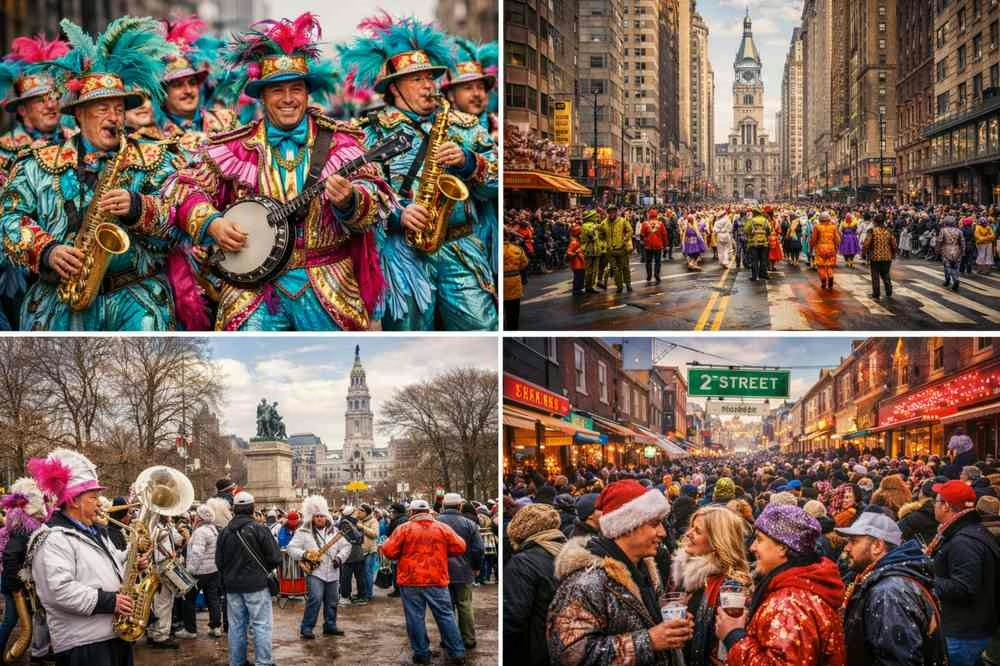
New Year’s Day in South Philadelphia was special because it blended family, neighborhood, music, and tradition into one shared experience. The Mummers Parade wasn’t just an event—it was woven into daily life. Bands practiced in local parks and schoolyards, marched through neighborhood streets, played in front of hospitals and rowhomes, and gathered on Second Street long after the parade ended. Homes stayed open, food was shared, and people reconnected with neighbors they might only see once a year.
When real life takes an unexpected turn, learn more about PhillyLegalConnect’s mission.
Below are a few of the moments that made South Philly’s New Year’s Day unforgettable.
You Were Not Staying in Bed That Morning
Next door to us lived the Durnings. Mr. Durning, as I remember, was either the head of the Durning String Band or closely related to its founder.
What I know for sure is this:
On New Year’s morning, the entire string band marched up the 2600 block of Rosewood Street and played directly in front of his house.
That was the alarm clock. You were not sleeping through it.
An Open House and a Pot Big Enough for the Navy Yard
My mother always had the house open on New Year’s Day.
Friends, family, and old neighbors—some who had moved away years earlier—came in and out all day. On the stove sat the biggest pot of vegetable soup you had ever seen. Big enough, I used to say, to feed the whole Navy Yard.
Alongside it was another staple: hot dogs and sauerkraut.
They went through 200 to 250 hot dogs every year, always Dietz & Watson.
People came in from the cold, ate, had a shot and a beer, and went right back out to Broad Street to catch the next band—conditions that today still raise concerns about winter hazards in Philadelphia.
When unexpected injuries happen in everyday Philadelphia life, knowing what to do after an accident in Philadelphia can make all the difference.
Where My Dad Watched the Parade
My dad loved the parade.
He stood across from Methodist Hospital because that’s where the TV crews set up back then. The Mummers always played in front of the hospital. They also played again in front of St. Agnes Hospital at Broad and Mifflin, and again further north at the Women’s Hospital.
Those were important stops. The bands knew it.
Where the Kids Watched
As kids, we watched from the steps of Grasso’s Funeral Home at Broad and Shunk Streets.
We grew up with Ray Grasso, the owner’s son, and those steps gave us the best view. All our friends met there. We had New Year’s hats, glasses, and whatever noisemakers we could get our hands on.
It felt like a reunion—every year.
Before the Parade Ever Began
Early that morning, long before the first band hit Broad Street, the string bands gathered in Marconi Plaza—what we just called the park.
They practiced. Tuned instruments. Lined up.
You heard everything at once—drums warming up, snippets of music, voices carrying through the cold air. That sound was part of New Year’s Day.
The Order Everyone Knew
The parade followed a rhythm everyone understood:
- The Comics went first
- Then the String Bands
- Then the Fancy Brigades
We knew players from many organizations. Bands came into neighborhoods during the year collecting money to help pay for costumes and productions.
My Uncle Leonard was a string band captain when I was a kid. Later, I worked with Bobby Shannon, his brother, and their dad—captains with Quaker City. Even today, friends and family still march.
The Mummers were truly South Philly.
When the Parade Didn’t End
Over time, routes and schedules changed. Today, the parade starts in Center City and ends near Washington Avenue before crossing over to the Mummers Museum.
But Second Street never changed.
After the parade ended on Broad Street, people headed to Two Street. The party continued. Music poured out of clubhouses. New Year’s Day lasted all night.
Those memories are cherished. They may never happen again in my lifetime.
I would not trade them for the world.
When something goes wrong, knowing where to turn can make all the difference.
Five generations of the Oakes family have our roots in South Philly.
We’re with you every step of the way.
Get Connected with The Oakes FirmKey Takeaways
- New Year’s Day in South Philly was a neighborhood-wide tradition
- String bands marched through residential streets before the parade
- Homes stayed open and food was shared all day
- The parade followed a familiar order every year
- Second Street remained the heart of the celebration
- These memories reflect a cultural moment that may never be repeated
Frequently Asked Questions
Did the Mummers Parade always start in South Philadelphia?
No. Years ago, the parade began in South Philadelphia. Today, it starts in Center City.
Why was Marconi Plaza important?
It served as an early-morning staging and practice area for string bands.
Why is Second Street still associated with the Mummers?
Many bands had clubhouses there, and celebrations continued long after the parade ended.
About the Author — Thomas G. Oakes
Thomas G. Oakes is a lifelong Philadelphian and the founder of PhillyLegalConnect.com and PhillyLegalNews.com. With more than 45 years of experience in the legal field, Tom served as an official court reporter in the Philadelphia courts and spent decades as a freelance reporter in both state and federal litigation.
He is a nationally recognized leader in courtroom technology, a certified TrialDirector trainer, and has taught lawyers, judges, and law students across the country — including at Temple University’s LL.M. in Trial Advocacy program and through major legal organizations such as the FDCC, IADC, and ABA. Tom has also lectured for the Delaware County Bar Association, the Gloucester County Bar Association in New Jersey, and presented for The Legal Intelligencer at Philadelphia’s Union League and other venues, speaking on trial technology, visual advocacy, and modern courtroom presentation.
Through PhillyLegalConnect and PhillyLegalNews, Tom blends his courtroom experience, technology expertise, and deep Philadelphia roots to help injured individuals and their families better understand the legal system — and connect with trusted trial lawyers when it matters most.
To read more about the author, visit the full biography here: https://phillylegalnews.com/about-the-editor/
Disclaimer
PhillyLegalConnect is not a law firm and does not provide legal advice. The information on this website is for educational purposes only and does not create an attorney–client relationship. If you need legal advice about a personal injury matter, we can help connect you with qualified Philadelphia trial lawyers who can evaluate your case.