
University City is one of the most active parts of Philadelphia. Home to the University of Pennsylvania, Drexel University, CHOP, HUP, and Penn Presbyterian, the neighborhood sees constant movement from students, hospital workers, patients, commuters, cyclists, delivery drivers, and rideshare vehicles.
University City accidents in Philadelphia are common due to heavy pedestrian traffic, major hospital activity, and constant commuter movement. This area, home to Penn, Drexel, and several major medical centers, sees a high volume of students, cyclists, rideshare vehicles, and emergency traffic sharing the same streets.
Corridors like Market Street, Chestnut Street, Spruce Street, 34th Street, and the South Street Bridge create a dense mix of foot traffic, bike activity, buses, and vehicles all competing for limited space. Because of that, accidents in University City often involve pedestrian crossings, bike lanes, turning vehicles, emergency traffic, and congestion near major institutions.
This guide is part of our broader Philadelphia Neighborhood Safety page. If you are trying to understand what to do after an injury, you can also start with The Philadelphia Injury Playbook .
Key Takeaways
- Heavy foot traffic: Students, hospital staff, patients, and visitors create constant pedestrian movement throughout the neighborhood.
- Major traffic corridors: Market Street, 34th Street, Spruce Street, and the South Street Bridge increase accident exposure.
- Hospital-related congestion: Ambulances, patient drop-offs, rideshares, and shift changes create unpredictable traffic conditions.
- Bike and scooter risks: Riders often share space with turning vehicles, buses, and crowded intersections.
- Part of a larger citywide pattern: University City fits into Philadelphia’s broader network of neighborhood-specific traffic and pedestrian safety concerns.
Get Connected with The Oakes Firm
If you were injured in University City or anywhere in Philadelphia, The Oakes Firm may be able to help.
We’re with you every step of the way.
University City Philadelphia Accident Risks and Safety Concerns
University City is one of Philadelphia’s busiest mixed-use areas. Students, hospital workers, patients, commuters, cyclists, and rideshare drivers all move through the same streets at the same time. That constant overlap increases the risk of pedestrian accidents, bicycle collisions, turning-vehicle crashes, and congestion-related incidents.
1. High Pedestrian Traffic
Foot traffic is constant throughout University City. Students cross Market Street, Chestnut Street, and Spruce Street throughout the day while moving between classrooms, housing, transit stops, and nearby businesses. Visitors and patients also walk between major institutions such as HUP, CHOP, and Penn Presbyterian, often through crowded intersections and active loading zones.
The neighborhood also attracts first-time students, families, and visitors who may not be familiar with Philadelphia traffic patterns, signal timing, or the pace of local traffic. That unfamiliarity can increase the chance of dangerous crossings and driver-pedestrian conflicts.
2. Busy Intersections and Roads
Several intersections in and around University City carry especially heavy traffic and deserve close attention:
- 34th Street and Market Street: A central transit hub where buses, trolleys, vehicles, cyclists, and pedestrians all converge.
- 38th Street and Spruce Street: A hospital-influenced corridor with patient drop-offs, employee traffic, and frequent ambulance movement.
- South Street Bridge and Schuylkill Avenue: A high-volume gateway where I-76 traffic meets bikes, pedestrians, and rideshare vehicles entering or leaving University City.
3. Bicycle and E-Scooter Hazards
University City has bike lanes, shared streets, and frequent scooter activity, but those features do not eliminate risk. Cyclists and scooter riders remain vulnerable when drivers turn quickly, drift into bike lanes, block visibility, or stop unexpectedly near intersections and loading areas.
4. Nightlife and Late-Night Activity
University City’s restaurants, bars, and student gathering spots create another layer of risk, especially at night. Traffic along Walnut Street and Chestnut Street often mixes with pedestrians who may be distracted, in a hurry, or crossing mid-block. Visibility changes, rideshare pickups, and late-night congestion can all contribute to accidents.
Hospitals and Emergency Vehicles
University City is home to some of the largest hospital systems in Philadelphia, including:
- Hospital of the University of Pennsylvania (HUP)
- Children’s Hospital of Philadelphia (CHOP)
- Penn Presbyterian Medical Center
Ambulances and emergency vehicles move through this neighborhood every day. While emergency response is essential, it also creates additional danger when drivers fail to yield, pedestrians step into intersections unexpectedly, or congestion limits visibility and reaction time.
Hospital Growth and Expansion
Over time, hospital expansion in University City has brought more employees, patients, visitors, service vehicles, and rideshare traffic into the same street network. Corridors around Spruce Street, 34th Street, and Civic Center Boulevard often experience congestion tied to medical appointments, shift changes, emergency activity, and drop-off traffic. That growth has made parts of University City more difficult to navigate safely than in earlier decades.
The South Street Bridge Connection
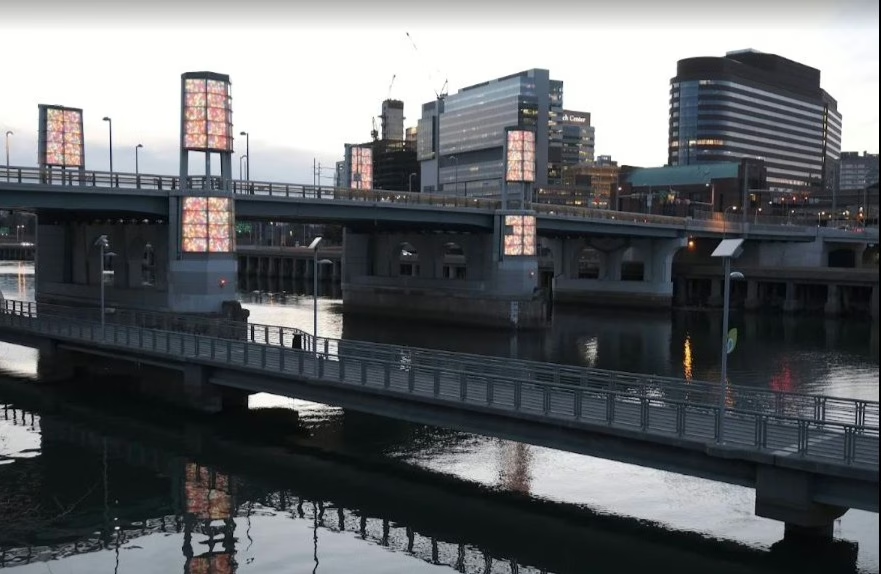
The South Street Bridge is one of the most important links between Center City, University City, and I-76. It carries a constant mix of local traffic, hospital commuters, cyclists, joggers, students, and rideshare vehicles.
- Heavy commuter traffic during rush hours
- Constant merges from highway ramps
- Cyclists and pedestrians using the bridge path and nearby crossings
Because so many different traffic patterns converge here, the South Street Bridge remains one of the most important — and potentially most dangerous — gateways into University City.
Because of the heavy pedestrian traffic and complex intersections throughout this corridor, accidents in University City Philadelphia often involve people crossing busy streets or navigating high-volume traffic patterns. If you were injured in this type of incident, you can learn more about your options by speaking with a Philadelphia pedestrian accident lawyer .
Nearby areas like Graduate Hospital safety and accident risks are closely connected to University City, especially along the South Street Bridge corridor, where pedestrian traffic, cyclists, and commuter vehicles frequently overlap.
Traffic Merging from I-76 and Nearby Corridors
Access from I-76 pushes vehicles directly into already busy University City corridors, especially around the South Street Bridge and University Avenue approaches. Drivers entering the neighborhood often encounter sudden backups, tight turns, limited sightlines, and confusing lane movement. Traffic pressure from nearby South Philadelphia approach routes can add to the congestion as commuters, students, hospital traffic, and local drivers all converge in a relatively compact area.
According to Philadelphia’s Vision Zero framework, corridors connected to the city’s High Injury Network deserve close attention because a relatively small percentage of streets account for most severe and fatal crashes. That makes traffic safety improvements in and around University City especially important.
For broader citywide context, visit our Philadelphia Neighborhood Safety page. If you need step-by-step guidance after an injury, start with The Philadelphia Injury Playbook.
Get Connected with The Oakes Firm
If you were injured in University City or anywhere in Philadelphia, The Oakes Firm may be able to help.
We’re with you every step of the way.
When I was a kid, the Philadelphia Eagles played their home games at Franklin Field on Penn’s campus. We would walk from our home in South Philly through the neighborhoods and parishes, eventually crossing the South Street Bridge to get to the game.
Back in the early 1960s, traffic wasn’t nearly as hectic — there were far fewer cars on the road. More than 50 years later, the changes are enormous. The Eagles no longer play at Franklin Field, and University City has transformed into one of the busiest and most congested parts of Philadelphia.
— Thomas G. Oakes
Student Safety in University City
With thousands of students walking, biking, and commuting through University City each day, the risks of pedestrian and bicycle collisions are very real. The University of Pennsylvania and Drexel University generate constant foot traffic across major corridors like Market Street, Chestnut Street, Walnut Street, and Spruce Street.
These areas are often crowded with cars, buses, bikes, scooters, and rideshare vehicles all competing for space. Accidents involving students frequently occur at intersections, crosswalks, and mid-block crossings where visibility, timing, and traffic flow can quickly become unpredictable.
Even a short walk to class may involve crossing some of the busiest streets in Philadelphia. Students should stay alert at intersections, avoid looking at phones while crossing, and make eye contact with drivers whenever possible.
If you’re ever involved in an accident, documenting the scene is critical. Learn the 5 photographs you should take after an accident — a must-read for students, residents, and anyone traveling through University City.
Why University City Is a High-Risk Area
According to Philadelphia’s Vision Zero framework, a small percentage of city streets account for a large share of serious and fatal crashes. Major corridors in University City — including Market Street, Chestnut Street, and Spruce Street — are part of this high-risk network due to the volume of traffic, pedestrian movement, and constant activity.
With students, hospital traffic, commuters, cyclists, and visitors all moving through a relatively compact area, University City remains one of the most complex and potentially dangerous neighborhoods for both pedestrians and drivers.
Final Thoughts
University City is one of Philadelphia’s most vibrant neighborhoods, but also one of its busiest and most challenging when it comes to traffic safety. Whether you are a student, hospital worker, commuter, or visitor, awareness at intersections and along major corridors is essential.
This guide is part of our broader Philadelphia Neighborhood Safety page. If you need step-by-step guidance after an accident, visit The Philadelphia Injury Playbook .
University City Philadelphia Accident FAQs
Are accidents common in University City Philadelphia?
Accidents in University City Philadelphia are relatively common because the area combines heavy pedestrian traffic, hospital activity, bike lanes, buses, rideshare vehicles, and major commuter routes in a compact part of the city.
Where do most accidents happen in University City?
Common accident areas in University City include the South Street Bridge corridor, Market Street, Chestnut Street, Spruce Street, and major intersections near Penn, Drexel, and nearby hospitals.
Why is University City considered a high-risk traffic area?
University City connects students, hospital workers, commuters, cyclists, and pedestrians through the same streets every day. That constant overlap creates more congestion, more crossing conflicts, and more chances for accidents at busy intersections.
What types of accidents are most common in University City?
The most common accidents in University City include pedestrian collisions, bicycle and scooter crashes, intersection accidents, rideshare-related incidents, and vehicle crashes near hospital and campus corridors.
What should you do after an accident in University City Philadelphia?
Get medical care, report the accident, take photos of the scene, gather witness information, and document where the incident happened. Acting quickly can help preserve evidence and protect your options.
How long do you have to file an injury claim in Pennsylvania?
In most cases, Pennsylvania law gives you two years from the date of the accident to file a personal injury claim.

