Key Takeaways
- High-risk intersections: The Triangle (24th & South & Grays Ferry Ave) is a major accident point.
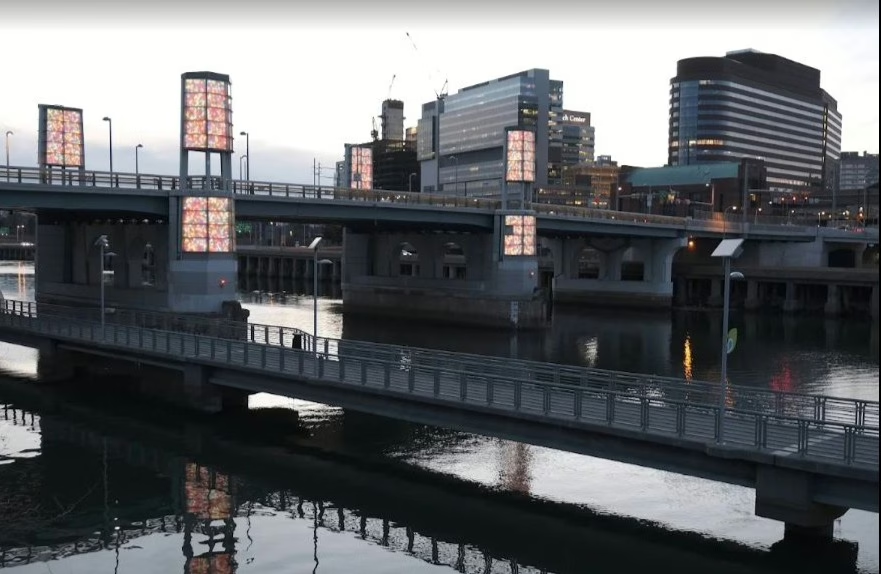
- Bridge corridor risk: The South Street Bridge connects heavy commuter, bike, and pedestrian traffic.
- Neighborhood crossover: Graduate Hospital connects Point Breeze, Grays Ferry, Rittenhouse, and University City.
- Pedestrian-heavy environment: Shops, parks, and sidewalks create constant foot traffic.
- Mixed traffic patterns: Cars, bikes, buses, and rideshares overlap in tight corridors.
Graduate Hospital accidents Philadelphia often occur at busy intersections, along the South Street Bridge, and in areas with heavy pedestrian and commuter traffic.
Growing up in Philadelphia, you get to know neighborhoods not just by their names, but by their landmarks, parishes, and connections. Graduate Hospital has always been a place where communities meet — from the bustling Triangle at 24th Street, South Street, and Grays Ferry Avenue, to the South Street Bridge that ties the neighborhood directly to University City.
It’s a community rich in history, but like every part of Philadelphia, it carries real safety concerns due to its busy intersections, steady pedestrian movement, and constant flow of commuter traffic.
This guide explores Graduate Hospital’s role as a crossroads between neighborhoods and highlights the accident risks that come with its streets, sidewalks, parks, and connections to surrounding areas.
Accidents in Graduate Hospital Philadelphia often occur at busy intersections, along the South Street Bridge, and in areas with heavy pedestrian and commuter traffic.
Graduate Hospital Philadelphia Accident Risks and Safety Concerns
Graduate Hospital is one of Philadelphia’s most connected neighborhoods, where multiple traffic corridors, pedestrian routes, and commuter patterns intersect. Because of this, accidents in Graduate Hospital Philadelphia often involve a mix of vehicles, cyclists, and pedestrians navigating tight streets, busy intersections, and high-volume crossing points.
The Triangle (24th Street, South Street, and Grays Ferry Avenue)
The Triangle is one of the most recognizable — and busiest — intersections in Graduate Hospital. Vehicles, bikes, and pedestrians all converge here from multiple angles, often with limited visibility and unpredictable traffic flow. This makes it one of the most common locations for accidents in the neighborhood.
South Street Bridge and Schuylkill River Corridor
The South Street Bridge connects Graduate Hospital directly to University City, carrying thousands of commuters, students, cyclists, and pedestrians every day. The nearby Schuylkill River Trail and park areas add additional foot and bike traffic, creating a complex environment where multiple travel patterns overlap.
Because of the heavy pedestrian and commuter activity in this corridor, accidents often involve people crossing busy streets, navigating bike lanes, or merging into fast-moving traffic.
If you were injured in this type of incident, you can learn more about your options by speaking with a Philadelphia pedestrian accident lawyer .
Sidewalks, Shops, and Local Foot Traffic
Graduate Hospital’s growing mix of businesses, restaurants, and neighborhood shops brings steady pedestrian movement throughout the day. Areas near South Street and local markets often experience crowded sidewalks, uneven walking surfaces, and entryway hazards that can lead to slip-and-fall injuries.
Residential Developments and Walkways
Newer developments such as Naval Square highlight how growing residential communities introduce additional safety considerations. Shared walkways, stairwells, parking areas, and maintenance issues can all contribute to accidents if not properly maintained.
Nearby areas like University City Philadelphia Safety Guide: Traffic, Pedestrian, and Accident Risks are closely connected to Graduate Hospital, especially along the South Street Bridge corridor where traffic patterns and pedestrian risks frequently overlap.
Graduate Hospital’s Neighborhood Connections and Traffic Flow
Graduate Hospital sits at the center of several Philadelphia neighborhoods, with daily movement flowing in every direction. These connections shape not only how people live and commute, but also where accident risks tend to develop.
- Point Breeze & St. Gabe’s Parish: Just to the south, this parish-centered community flows directly into Graduate Hospital, with residents regularly crossing neighborhood streets for schools, churches, and daily routines.
- Grays Ferry: Connected by Washington Avenue and Naval Square, Grays Ferry and Graduate Hospital share overlapping traffic patterns, housing development, and commuter routes.
- Rittenhouse Square & St. Patrick’s Church: Walnut Street serves as a major east-west corridor linking Graduate Hospital to Center City, with steady pedestrian and vehicle movement between neighborhoods.
- University City: Across the South Street Bridge, residents connect daily to hospitals, universities, and workplaces. Learn more about nearby risks in University City Philadelphia Safety Guide: Traffic, Pedestrian, and Accident Risks .
- Logan Square & the Parkway: To the north, the Cathedral and the Philadelphia Museum of Art anchor major city routes, with traffic corridors that Graduate Hospital residents frequently use.
Understanding Graduate Hospital Philadelphia Safety and Accident Risks
Growing up in Philadelphia, you get to know neighborhoods not just by their names, but by their landmarks, parishes, and connections. Graduate Hospital has always been a place where communities meet — from the bustling Triangle at 24th Street, South Street, and Grays Ferry Avenue, to the South Street Bridge that ties the neighborhood directly to University City .
It’s a community rich in history, but like every part of Philadelphia, it carries real safety concerns due to its busy intersections, steady pedestrian movement, and constant flow of commuter traffic. Accidents in Graduate Hospital Philadelphia often involve pedestrians, cyclists, and vehicles navigating tight streets and high-volume crossing points.
This guide explores Graduate Hospital’s role as a crossroads between neighborhoods and highlights the accident risks that come with its streets, sidewalks, parks, and connections to surrounding areas.
Graduate Hospital’s Neighborhood Connections and Daily Traffic Flow
Graduate Hospital isn’t just defined by its own streets — it’s shaped by how it connects to the communities around it. These connections influence how people live, commute, and move through the neighborhood, and they play a major role in where accident risks develop.
To the south, Point Breeze remains one of Philadelphia’s strongest parish-centered neighborhoods. Families who have lived there for generations share ties with St. Gabriel’s Parish, and many cross north into Graduate Hospital for shopping, dining, and commuting. The flow between these neighborhoods creates a shared identity where parish life meets the pace of Center City.
Moving west, Grays Ferry blends historic rowhomes with newer housing and redevelopment. Graduate Hospital and Grays Ferry are often linked through Naval Square, which straddles both neighborhoods. Traffic along Washington Avenue and Grays Ferry Avenue reinforces this connection, with many residents traveling through Graduate Hospital daily for work, school, and everyday errands. These overlapping routes increase both congestion and accident risk.
To the east and north, Rittenhouse Square offers a different type of connection. Known for its historic park and cultural life, Rittenhouse is directly tied to Graduate Hospital through St. Patrick’s Church at 20th and Locust and along Walnut Street, which channels steady commuter traffic westward. Together, these neighborhoods form a natural corridor between Center City and surrounding areas.
Finally, to the west, University City is both a destination and a lifeline. The South Street Bridge serves as the primary gateway for Graduate Hospital residents heading to hospitals, universities, and major employers. With thousands crossing daily, this corridor has transformed Graduate Hospital into one of Philadelphia’s most active commuter neighborhoods — where pedestrian, bicycle, and vehicle traffic all intersect.
Transportation in and Around Graduate Hospital Philadelphia
One of the defining features of Graduate Hospital is its accessibility. With multiple transportation options connecting the neighborhood to Center City, University City, and surrounding areas, daily movement through these corridors is constant. That same accessibility also contributes to increased traffic congestion and accident risks throughout the neighborhood.
SEPTA Buses and Local Routes
SEPTA buses serve Graduate Hospital along major corridors including South Street, Washington Avenue, and Grays Ferry Avenue. These routes connect residents to Center City, University City, and other parts of Philadelphia, making the neighborhood an easy launching point for work, school, and daily life. For many residents, routes like the 7 and 17 buses are part of their daily routine.
Rail Lines, Trolleys, and Regional Access
In addition to buses, Graduate Hospital is within close reach of SEPTA’s Broad Street Line and trolley routes that run through University City. This provides direct access to destinations such as Temple University, the sports complex, and major employment centers. Regional rail connections through 30th Street Station also allow residents to travel beyond Philadelphia into the suburbs and along the Northeast Corridor.
Rideshare and Taxi Traffic
Rideshare services such as Uber and Lyft are widely used in Graduate Hospital, especially for trips to nearby hospitals in University City and nightlife destinations in Center City. Traditional Philadelphia taxis also remain active in the area, particularly near South Street. While these services add convenience, they also increase traffic volume, double-parking, and sudden stops — all of which contribute to accident risks.
These layers of connectivity — from neighborhood foot traffic to buses, rail lines, and rideshare services — make Graduate Hospital one of Philadelphia’s most active transportation corridors. With constant movement through the area, safety awareness is essential for pedestrians, cyclists, and drivers navigating these busy streets.
What To Do After an Accident in Graduate Hospital Philadelphia
Growing up in Philadelphia, we were always taught to look out for one another. If you or someone you know is involved in an accident in Graduate Hospital, taking the right steps immediately can protect your safety, your health, and your ability to document what happened.
- Get medical attention immediately: Your health comes first. Even if injuries seem minor, getting checked by a medical professional is critical.
- Report the accident: Notify the proper authority, whether that is the police, a property owner, a business, or building management.
- Document the scene: Take clear photos of the location, sidewalks, vehicles, intersections, traffic signals, and any hazards involved.
- Speak with witnesses: If anyone saw what happened, try to get their name and contact information before leaving the scene.
- Understand your options: If you were injured, you may want to speak with a Philadelphia personal injury lawyer to better understand your next steps.
For longtime Philadelphians, the name Graduate Hospital means more than just the blocks around South Street. The neighborhood takes its name from the former Graduate Hospital, once located at 18th and South Streets. Even though the hospital itself is no longer there, people still refer to the area as “Graduate Hospital,” and the name continues to define the community.
Graduate Hospital also serves as a hub that ties multiple neighborhoods together. At The Triangle — where South Street, Grays Ferry Avenue, and 24th Street converge — traffic flows in every direction. Naval Square bridges Graduate Hospital with Grays Ferry, while Point Breeze and St. Gabe’s Parish flow northward into the area. To the east, St. Patrick’s Church at 20th and Locust connects Graduate Hospital to Rittenhouse Square, with Walnut Street stretching west toward University City.
Crossing the South Street Bridge links residents directly to the hospitals and universities in University City, while to the north, Logan Square and the Cathedral anchor Center City and extend toward the Philadelphia Museum of Art.
Graduate Hospital doesn’t exist in isolation — it’s a living part of Philadelphia’s history and daily life. Its name reflects a landmark that shaped the city, while its connections show why safety and awareness matter in every corner of this neighborhood.
— Thomas G. Oakes
Graduate Hospital accidents Philadelphia frequently occur at high-traffic intersections, along the South Street Bridge, and in areas with heavy pedestrian and commuter activity.
Graduate Hospital Philadelphia Accident and Safety FAQs
Are accidents common in Graduate Hospital Philadelphia?
Accidents in Graduate Hospital Philadelphia are relatively common due to heavy pedestrian traffic, busy intersections like The Triangle, and constant movement across the South Street Bridge corridor.
Where do most accidents happen in Graduate Hospital?
The Triangle at 24th and South Street, sidewalks near local businesses, and routes leading to the South Street Bridge are among the most common accident locations.
What types of accidents happen in Graduate Hospital?
Common incidents include pedestrian accidents, bicycle collisions, intersection crashes, and slip-and-fall injuries on sidewalks and in residential or commercial properties.
How long do I have to file a personal injury claim in Pennsylvania?
In most cases, you have two years from the date of the accident to file a personal injury claim.
What should I do immediately after an accident in Graduate Hospital?
Seek medical attention, report the incident, document the scene, gather witness information, and understand your legal options as soon as possible.
These guides provide additional information about accident risks, documentation, and nearby neighborhoods connected to Graduate Hospital.
5 Essential Photos to Take After an Accident
University City Philadelphia Safety Guide: Traffic, Pedestrian, and Accident Risks — A closer look at pedestrian safety, hospital traffic, and accident risks across the South Street Bridge corridor.